Interview with Muhammad Afif
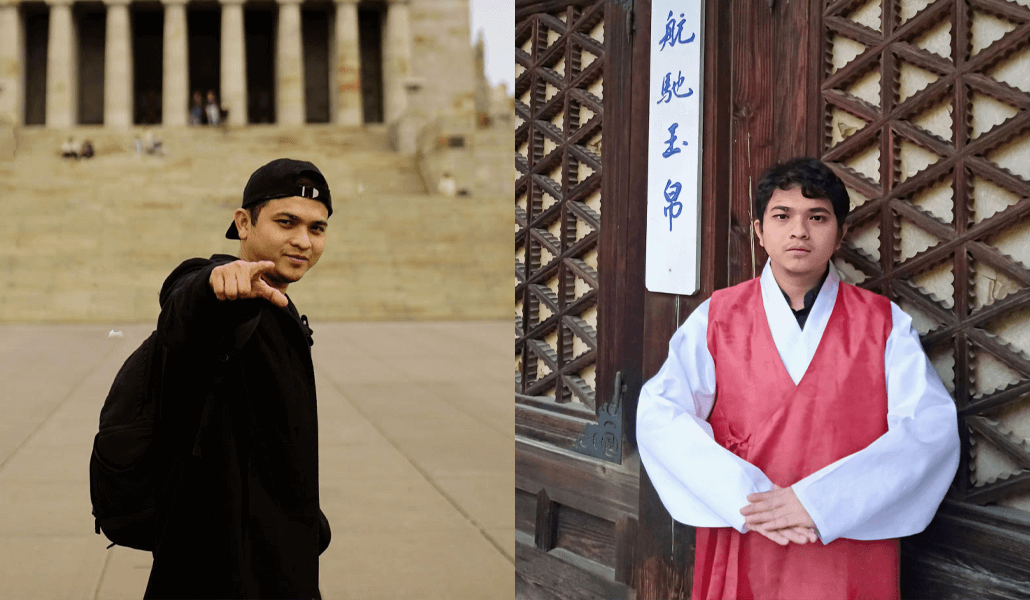
Q1.
Please briefly introduce yourself and your professional field.
My name is Muhammad Afif. My background is archaeologist. I have worked in archaeological and heritage fields since 2016 to 2023. I was doing a few job related to those fields such as excavation of archaeological sites, restoration and conservation of ancient buildings, and digitizing historical objects. Moreover, I was involved in research and management of World Heritage in Indonesia.
Q2.
What made you decided to join the CPI program?
What did you expect from the program?
I joined the CPI program in 2019 in Intangible Cultural Heritage (ICH) project collaborated with The International Information and Networking Center for Intangible Cultural Heritage in the Asia-Pacific Region under the Auspices of UNESCO (ICHCAP). I was interested to join because I would like to carry out a research about intangible aspects in two traditional houses, Hanok and Joglo Pencu Kudus, which can be applied for modern building nowadays.
When I was joined with CPI program, I expected to make something new from my research that can be applied in the real life in the future. My research was about applying traditional coating system of Joglo House and Hanok from deterioration due to the inscet and weathering. I expected that the traditional coating system of Joglo can be succesfully applied for Hanok and vice versa.
Q3.
What did you learn or experience from the training?
What impressed you the most about the program?
This program was designed for five months for ICH project participants. We carried out our researches individually, attending the Korean Language class, participated in international forum which was presenting Ban Ki Moon -a previous UN Secretary General-, doing some heritage excursions in South Korea, and met up with experts and stakehiolders from Asia Pacific countries. We also contributed to the magazine of ICHCAP to write about ICH from our own country.
I am impressed how they do all these great programs with a small team and in a short time.
Furhermore, CPI Program selected hundreds young artists and researchers from various backgrounds from all over the world to join in this residency every year. It needs a huge funding, the profesional and the solid team to run this porject properly. The committee of CPI should collaborate with various foundations in South Korea to receive resindecies and carry out their activities for a few months. For example, our team joined with ICHCAP foundation, the young professional curators cooperated with museums, the dancers and singers collaborated with artistic organizations, ect.
Q4.
How has your experience changed after participating in the training?
There are a lot of view I gained after I participated in CPI program. My background is archaeology and it is usually talking about tangible aspect of heritage rather than intangible aspect. And it is usually related to research. It changed my mind after I join this project and I found that many things that can be done related to the heritage itself especially in term of utilization of historical buildings. I used to think that heritage is only for education. It is, of course, true but the way to implement its value to get the goal of education is quite diverse. A lot of things and stories of it can be delivered using a various tools and it will be more entertain. For example, heritage can be a tourism area, it can be a shooting spot to make a movie, it can be an inspiration for the game online using digitization of cultural heritage, it can be a place for family entertainment, an inspiration for author to write a book or comic, and many things that we can do. So, CPI broadened my horizons on all those things.
Q5.
Have you had any follow-up activities or projects with other trainees, the training
institution, or other Korean cultural and artistic organizations?
If so, please share your experience.
I was one of the awardee of Follow up Support Program by KOFICE in 2020. My proposal was about discussing the values of World Heritage of Ombilin Coal Mining Heritage of Sawahlunto (OCMHS) in our book we created. We discussed OCMHS in a nutshell and the potencies of this living heritage. We choose these topics because it is important to deliver knowledge of these features to the public in a simple way. The Outstanding Universal Values, acculturation, and intangible cultural heritage are the unique features of Sawahlunto. Moreover, the writing style follows a popular scientific style. We expect that the community or travelers can understand OCMHS and Sawahlunto more comprehensively in terms of heritage and culture through this book.
I am grateful to have won this project because I can contribute the potency of OCMHS and it has been expanded my network and given me more opportunities in heritage. I met experts who focused on heritage and they appreciated our team work. I got the opportunity to work on one of the its restoration project in 2021. This book has become a reference for a few students to do their thesis. Moreover, my book has become an initial reference for a team from Singapore to take part in competition held by UNESCO WHIPIC in 2023 and they won this competition.
Q6.
What are your future plan in your professional field?
I am not working in heritage area right now but my future plan is still want to work in the field of heritage and archaeology either as a conservator, heritage consultant, and other heritage projects. I plan to study again next year in conservation area. I still remember that I have a vision about combination of traditional dan modern conservation system can be beneficial to solve the problem. So that, I have to study to back on the track.
I am interested to carry on my study in heritage conservation field which the curricullums discuss all problems of cultural heritage conservation such as conservation treatment, traditional and modern conservation methods, documentation and digitalization techniques saving for heritage, developing of treatment substance, urban heritage conservation, and the most interesting is community based conservation management where every regulation engages the community to reach the sustainable conservation goal.
Cultural heritage conservation should contribute to community development because cultural heritage is not only belongs to stakeholders but also belongs to all people and the model of heritage conservation should be eco-friendly, encouraging economy of inhabitant, and supporting the socio-cultural condition. This view appropriates with Sustainable Development Goals (SDGs) which want to balancing among environment, social, culture, and economy. Conservation method engaging society can make them appreciate the cultural heritage and the sustainable cultural heritage can be achieved.
Hopefully my goal can be reached.

Muhammad Afif (Indonesia)
2019 CPI Participant
He has worked in various archaeological project and heritage field area since 2016 to 2023. He is living in Australia right now.


