A Summer to Remember:
Recollections from my 2018 CPI Experience
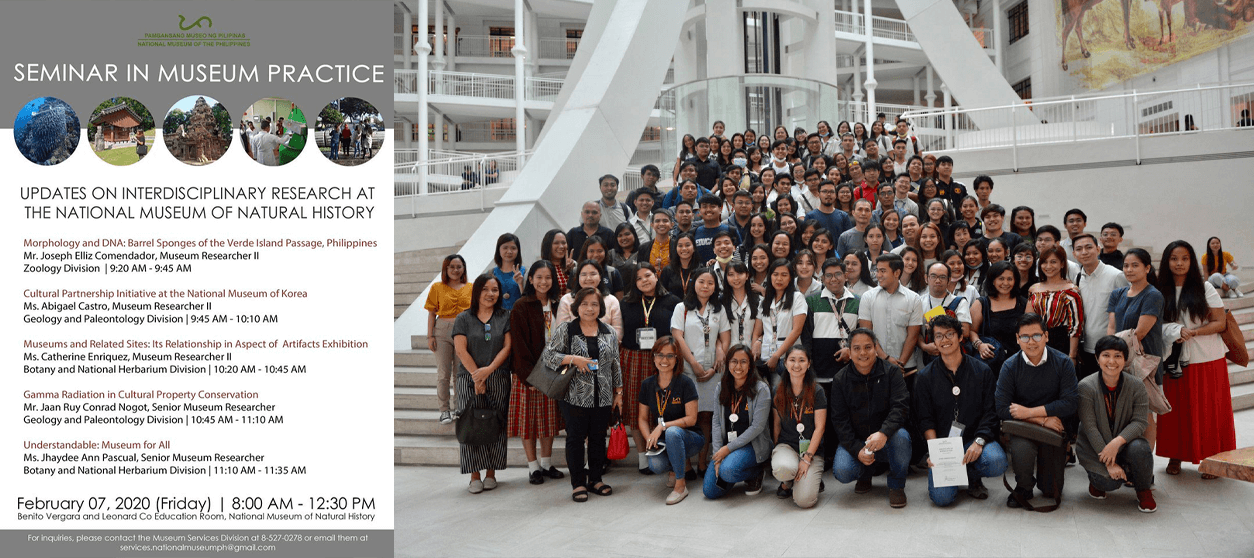
Promotional poster and group photo with the attendees of the program.
I had the opportunity to tell my colleagues and other museum visitors about my CPI experience during one of the NMP’s regular public programs.
Q1.
Please briefly introduce yourself and
your professional field.
안녕하세요! Mabuhay! I am Abi from the National Museum of the Philippines. I was part of the CPI Program in 2018 hosted by the National Folk Museum of Korea (NMFK).
I am the Senior Museum Researcher at the National Museum of the Philippines (NMP) under the Geology and Paleontology Division. As a museum researcher at the NMP, I get to utilize both the scientific and creative parts of myself. As a scientist, I usually take the lead in most of the paleontology research of the NMP. I also act as the lead collections manager for the fossils collection of the NMP. As an occasional creative, I take part in all the aspects of an exhibition - from design to implementation up to aftercare monitoring. Also, I get to be part of the NMP’s frontline staff during the conduct of several educational programs.
This past year, I have been quite busy with preparations for the new component museum of the NMP. Our curatorial group - the natural history group, was responsible for an entire gallery that intends to highlight the geo-biodiversity of the southern Philippines. This involved lots of on-site and online discussion meetings and collaborative work with our various stakeholders. This new component museum is set to be launched towards the latter part of 2024.
Q3.
What did you expect from the program?
Before my CPI training, my museology skills and experience were pretty basic, to say the least. My CPI application back then was anchored to my newbie experience as an exhibition planner when the NMP was launching its very first Natural History Museum. My hope during the CPI was to learn how our Korean colleagues approach a new exhibition project and what their post-launching activities plans were. I was particular about this because I wanted to know a much more efficient method of managing an exhibition project. I was also excited about visiting as many museums as I could during my CPI stay as a way of benchmarking for exhibition designs and themes.
I am proud and happy to say that these expectations were met with outstanding results. The NMFK made sure I learned and experienced things first-hand from their exhibition and education team. I even had the chance to join the ICOM-CECA Regional Meeting. This, for me, is a welcome surprise because it introduced me to the various ways that museums can reach out to the general public apart from its exhibitions and in-house educational programs.
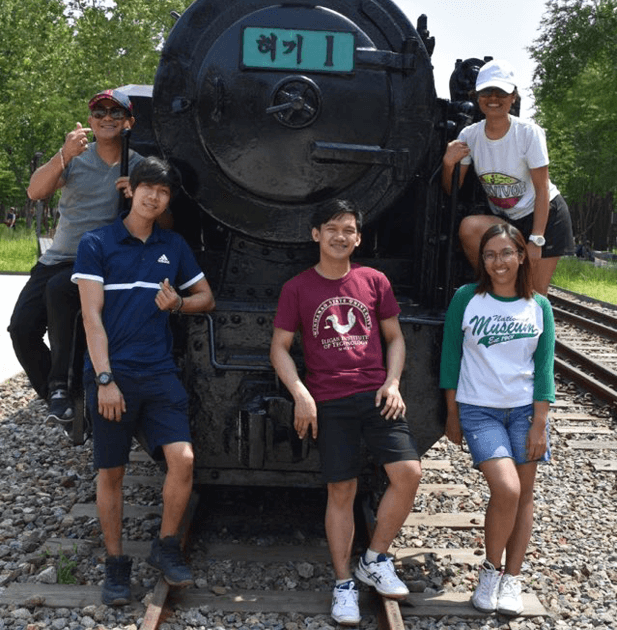
Meeting Filipino friends in Korea
I had a catch-up meeting with a Filipino friend who was in Seoul for
graduate studies.
Q2.
What made you decided to join the CPI program?
Initially, sending my application for CPI was just something I was asked to do for work. My museum supervisors sent me the instructions and my first thoughts were along the lines of “How am I gonna do this?” and “Am I the right person for this?”
These early hesitations stemmed from the fact that it was going to be quite a long training period - the longest that I would experience away from home. As of writing, it still is my longest training experience ever. Another is that the program is mainly a cultural appreciation and exchange program. Although it may seem that as a museum professional, I am eligible for CPI, my actual work tasks were more on the natural history and earth science disciplines. Back then, I thought my earth science research was too far off for CPI.
Eventually, these hesitations were put to rest after much self-reflection and several conversations with colleagues. I come to understand that CPI offers the most comprehensive and generous opportunity to build and enhance my capabilities as a museum professional. Also, the CPI program brings together more than a dozen culture enthusiasts around Asia. This means that not only do I experience the K-life, but I get to share and learn it with my global CPI co-participants.
Q4.
What did you learn or experience from the training?
Because CPI is a 5-month course, there is a wealth of experience and learnings for me as a participant. First, is learning hangul. I thought my Korean language class would be the most stressful part of CPI. My very first day in class proved that wrong. I honestly enjoyed it. There is some learning curve, of course. But I am proud to say I still can read hangul to this day. I cannot understand it anymore though, but I’ve been meaning to go back to learning it again.
I also learned a lot about the rock artefacts and stoneware culture of Korea. This culture resonates so much with my background in earth sciences. In my fieldtrip to Jeju, I understood the influence of the island’s geology with the people’s way of life. My research on stone tomb statues enlightened me about Korea’s historical beliefs and faith. It also showed me differences in presenting the same artefact for outdoor or indoor setting.
Being able to experience Korean office culture is also a welcome surprise. I think I am one of only a few among the CPI participants who reports to the office regularly. This experience helped me adapt and be at ease during my entire stay in Korea.
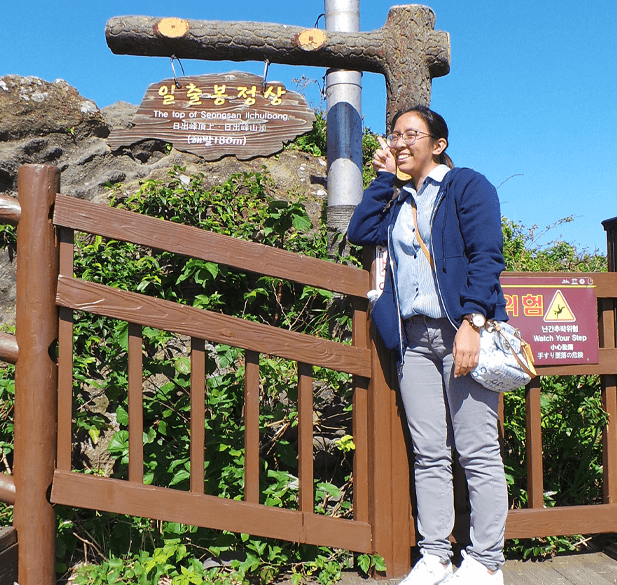
Jeju Island fieldtrip
I was always so proud of telling my co-CPI participants that my program and the NMFK has given me so many travel opportunities. My training was not confined to Seoul. I had the chance to visit the countryside of South Korea and even stay a few days in Jeju Island.
Q5.
What impressed you the most about the program?
There is a lot to be impressed about the CPI as a training and cultural exchange program. First, it has been going on for quite a while now. This clearly shows just how committed the Korean government is to prioritizing and sustaining this kind of cooperative cultural project.
It is also interesting to note that CPI covers so many aspects of culture - from the intangible to the contemporary. There is no discrimination in how culture is defined. I believe this enables CPI to extend the training and residency opportunities to many diverse people over the years.
Q6.
How has the program changed the way you see your field?
CPI definitely magnified my understanding on how much museums contribute to the welfare of the community. I had a countryside fieldtrip where the NMFK attended one of the educational programs of a small community museum they are supporting. This program was attended by women (mostly mothers) whose only available schedule was late in the afternoon. The community museum managed to put up a culture appreciation program that can adjust to the women’s available time. The attendees were so welcoming and appreciative of this. I can see how much they wanted to attend this kind of gathering if only they have time. It was a small gesture on the part of the museum but it proved to have a lasting effect to the community.
Q7.
What is your future plan in your professional field?
For now, my career path is still with the NMP. I enjoy my day-to-day tasks both here in the office and out in the field. The NMP is also constantly supportive of my research and other collaboration initiatives which makes me appreciate the museum more.
Q8.
Would recommend the CPI to other cultural professionals?
Always! I’ve been forwarding CPI’s call for applications every year since I joined. There is no one yet from the NMP who has successfully been chosen for the program since I joined. Hopefully, soon, someone from our museum will get to experience CPI.
Q9.
Is there anything else you want to share about CPI?
Congratulations to CPI for making it to 20 years! This is a truly impressive achievement. I do hope for many more years ahead. My experience with CPI was just so memorable, fun, and insightful, both in my professional and personal life. Thank you for having me.
ABIGAEL CASTRO (The PHILIPPINES)
2018 CPI Participant
NATIONAL MUSEUM OF THE PHILIPPINES/SENIOR MUSEUM RESEARCHER


