Passados coloniais: a proximidade patrimonial entre Brasil e Coreia do Sul
Q1.
Please briefly introduce yourself and your professional field
I was born in Rio de Janeiro in 1980, the youngest of three siblings. I was raised in Ilha do Governador, a neighborhood located in the north of the city, and I chose to study History because I always liked the subject. I mark 2002 as the beginning of my career as a researcher, 22 years ago, during my 5th year of undergraduate studies, when I was selected for a scientific initiation scholarship offered by Professor Dr. Fernando Lattman-Weltman, at the time a researcher at the Center for Research and Documentation of Contemporary Brazilian History (CPDOC) of the Getúlio Vargas Foundation (FGV). Professor Fernando Lattman-Weltman's guidance and the intellectual environment at CPDOC led me to become interested in Political Science. So, in 2004, I entered the master's degree program in Political Science (PPGCP) at UFRJ.
A year before defending my dissertation, I applied for the national public examination for the National Institute of Historical and Artistic Heritage (Instituto do Patrimônio Histórico e Artístico Nacional - IPHAN). At the end of the competition, I was selected from around 2,500 candidates for 14 vacancies and, in March 2006, I was called up to take up the position of Historian, working at the Luso-Brazilian Reference Center (Cerlub) of the National Historical Museum (Museu Histórico Nacional - MHN), which at the time was subordinate to IPHAN.
After joining the MHN, I had the opportunity to take part in activities that I consider to be important in my professional career, such as being the scientific editor of the Annals of the National Historical Museum for 13 years, coordinator of the MHN's International Seminars, and organizer and editor of 13 books and author of 34 publications, including articles and chapters, dedicated to topics in the field of history and museums.
In January 2022, at my request, I was transferred to the Roberto Burle Marx Site (Sítio Roberto Burle Marx - SRBM), a site inscribed on the UNESCO World Heritage List. Since then, I have dedicated myself to researching and promoting curatorial activities with the SRBM collection, which is of a scientific and artistic nature.
Since 2023, I have held the position of Head of the Technical Division and Substitute Director of the SRBM, carrying out management functions, coordinating the research and publishing program for the Roberto Burle Marx World Heritage Site, as well as coordinating the management of the Site in terms of its demands as an asset inscribed on the Unesco World Heritage List, which involves the executive management of the SRBM Management Committee, the preparation of the State of Conservation Reports presented to Unesco, among others.
I am also a professor in the post-graduate program in Preservation and Management of the Cultural Heritage of Science and Health, at Fiocruz, and a professor in the master's program for history professors at the Federal University of the State of Rio de Janeiro, Unirio.
Q2.
What made you decided to join the CPI program?
What did you expect from the program?
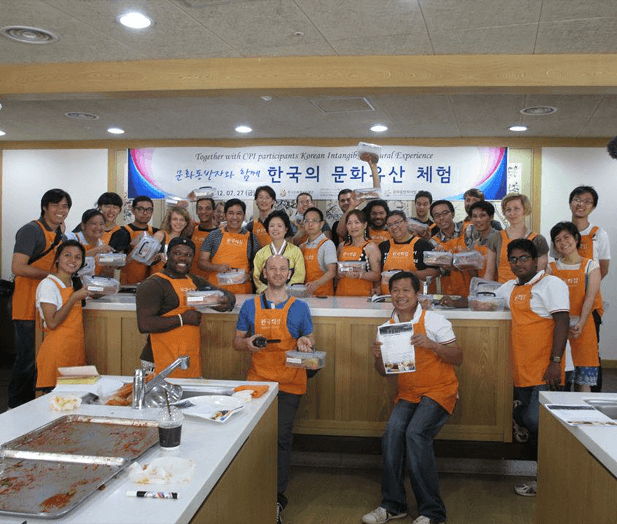
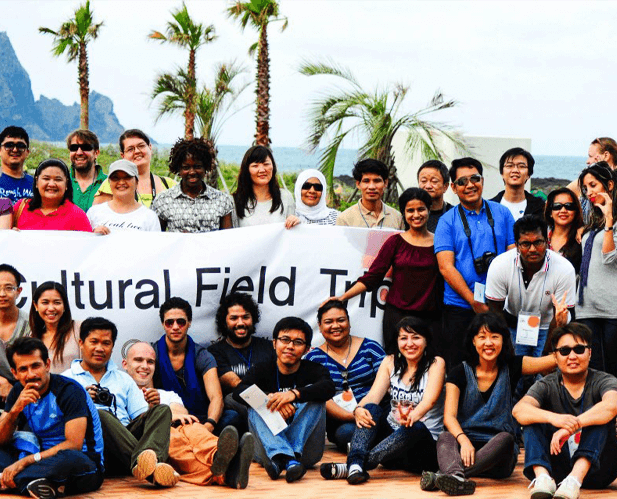
In 2012, I was selected as a curator for the Cultural Partnership Initiative (CPI) - Curatorship Program Initiative to work for six months in Seoul, South Korea, at the National Folk Museum of Korea (NFMK), accompanying the museum's curatorial activities and developing research on the Korean national historical narrative in the long-term exhibition of the institution that hosted me. What motivated me to sign up for the program was the possibility of studying the history of museums and Korean cultural heritage, an experience that was both distant and close to the Brazilian reality, as these are countries that have gone through colonial experiences. The result met my expectations, with the research entitled The Historical Exhibition of the NFMK: Constructing a National Narrative using the historical highlights where I analyzed how the presence of certain themes and objects linked to the history of the former Joseon, Goguryeo, Goryo, Silla and Baekje kingdoms, in Korean museums and in the NFMK's exhibitions, are inserted in a construction of Korean identity, which all the time presents the contemporary history of that country, marked by the Japanese occupation (1910-1945) and the war with North Korea (1950-1953).
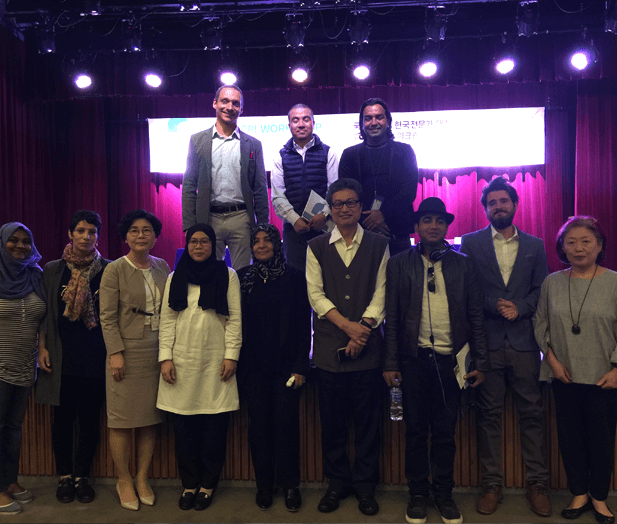
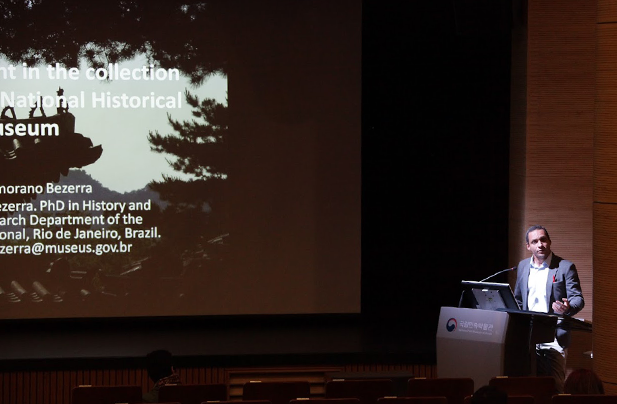
In 2017, I returned to Seoul as a guest of the CPI Workshop Promotion of International Cooperation with Foreign Museum Curators, where I presented a lecture entitled Korea and Orient in the Collection of Brazilian National Historical Museum, which was published in the proceedings of the event in Korean and English.
I believe that one of the outcomes of this experience was that, in addition to understanding the dynamics of heritage in that country, it opened my eyes to the objects of Asian origin in the MHN's collection, which later materialized in my post-doctoral research in museology.
In 2024, I was once again selected for a training program promoted by Kofice, the 2024 CPI Cultural Experts Training, in the area of digital publishing for children. The training took place online for 2 weeks (in Brazil) and in person for 4 weeks in Busan, South Korea. The training included both the preparation of the publication, from the development of the script, storyboard to the final digital format, and the preparation of an action plan, based on the publication.
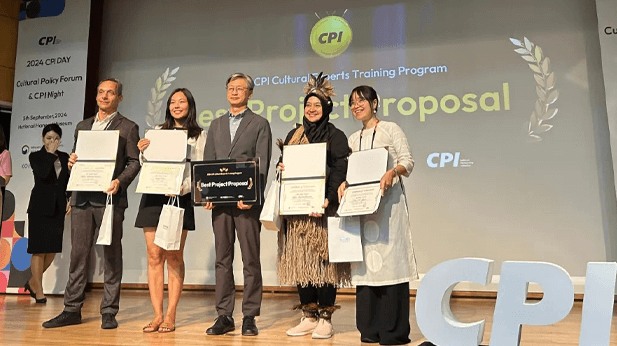
The project was developed by the team I was part of, made up of myself (editor) and other participants in the Program: Saruul Erdem (Mongolia) also editor, Triska Fauziah (author from Indonesia) and Cam Nguyen (illustrator from Vietnam). The project, entitled A World of Wonders, was awarded best project in the 2024 CPI Cultural Experts Training Program. The story of the book is about a family from Indonesia who move to Seoul with their young son, Bayu. As Bayu suffers the hardships that every immigrant suffers; homesickness, missing friends, unfamiliarity with the language, among others, he meets other foreign children playing with kites, which makes him interact with them and overcome the anxiety and fear he felt. The kite was chosen as a link between the countries, as it is a toy from Asia that has spread around the world. The kite in this project represented something that overcomes cultural differences and can help in understanding others. The project developed on the basis of the publication was to hold a Kite Workshop, based on the publication, which has a PDF and Videobook version. The idea of the workshop is to first present the audiovisual version of the book to children, followed by a workshop on traditional kites. It's a low-cost project with great appeal, since it's about stimulating creativity, encouraging analog and outdoor activities.
Q3.
What did you learn or experience from the training?
What impressed you the most about the program?
From the perspective of a researcher and teacher in the field of heritage, what I learned most from my participation in the program was to better understand how the heritage logics of South Korea and Brazil have important parallels, mainly because the heritage of both countries is very much a reflection of the colonial experience. What impresses me most about the program as a whole is its institutional organization and the support given to participants. Added to this is the possibility of coming into contact with other Asian professionals, mainly from countries with little influence on Brazilian culture, such as Mongolia, Thailand, Laos, Indonesia and the Philippines.
Q4.
Were you able to apply what you learned or experienced
in your current work?
Based on my experience in that country and contact with researchers dedicated to Korean heritage, I organized an international dossier for volume 45 of the Annals of the National Historical Museum, published in 2013. It is a collection of texts on Korea's cultural heritage, which includes a Portuguese translation of the article by Professor Hyung Il Pai from the University of Santa Barbara. This is followed by an article by emeritus professors Roger L. Janelli, from Indiana University, USA, and Dawnhee Yim, from Dongguk University, South Korea, on the role of folklore in Korean nationalism during and after the Japanese occupation, followed by an article on my research at CPI. The dossier also included articles by Professor Andrea de Benedittis, from Ca'Foscari University, Italy, which is a study on gold crowns used during the ancient kingdoms of Korea; by NFMK researcher Hyeon Mi Chung, on the production techniques of kimchi, an important food in Korean gastronomy; and a critical analysis by Filipino photographer and art critic Giancarlo Cruz, on the work of Lee Yongbeak, a Korean artist at the forefront of video art.
Another outcome of my experience at the CPI was my post-doctoral research, which, from Igor Kopytoff's perspective of a cultural biography of things, studied the MHN's Asian collection of ivory sculptures. Made up of 572 Christian images carved mostly in ivory, the collection is considered one of the most significant of its kind held by a Brazilian public museum. The name of the collection refers to the collector José Luiz de Souza Lima, and it was bought for the MHN in the 1940s. Due to the limited information on the origins of the pieces and the collector, the research organized information in order to: (1) point to the possibilities of Catholic ivory imagery entering the country via the Carreira das Índias; (2) point to the possibility of ivory imagery being produced in Brazil; (3) understand the valuation arguments that justified the purchase of the collection; (4) to point out the similarities between Souza Lima's collecting and other collections; and (5) to describe how the “oriental” element was associated with the collection in the process of musealization, and how the curatorial actions at the MHN Museu Histórico Nacional are marked by a discourse that updates Portuguese orientalism in Brazil.
It is argued that the curation of the Souza Lima Collection has been based on narratives that value the Portuguese colonial experience and reaffirm discourses with colonial perspectives. This type of approach eclipses informational aspects about the collection, such as its origins and the resistance strategies of its producers, as well as ethical questions regarding the entry of these objects into the collecting circuit and museum collections. An article based on the research report was sent for submission to the Anais do Museu Paulista, which was approved in November 2023 and published in volume 32, 2024.
In 2024, during my last CPI training session, I was able to better develop my skills as an editor, mainly because I was able to produce a book aimed at children and of an educational nature, something I had never done before in my career, which was focused on academic publications. Based on this acquired expertise, I plan to produce a children's publication in the area of heritage education in 2025, using the botanical collection of the Roberto Burle Marx Site, the institution where I currently work.
Q5.
How has your experience changed after participating
in the training?
From my experience with the CPI, my career as a researcher is increasingly being directed towards understanding how the Korean experience with cultural heritage has important parallels with the Brazilian reality, which points to many future projects. Because of my experience at CPI, I have become one of the few Brazilian researchers in the field of cultural heritage with research and experience with Korean historical heritage.
Q7.
Did you form any lasting relationships or networks from the
program? How have those connections been beneficial?
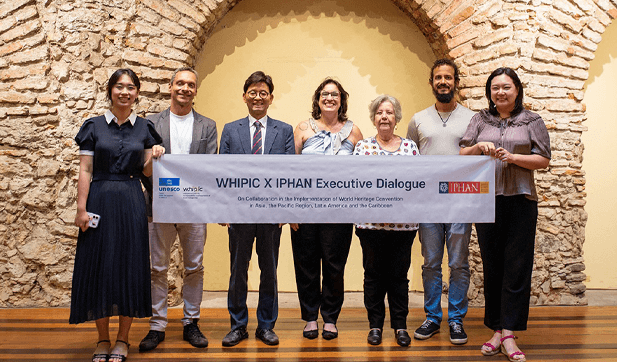
Yes, since my first trip to Korea in 2012, I've kept in touch with Korean, Filipino and Egyptian professionals, and I've hosted researchers from the National Folk Museum of Korea (NFMK) in Brazil. I also published an article in the proceedings of the event celebrating 10 years of CPI at the NFMK. In 2024, I established a partnership between my institution, the SRBM, and WHIPIC, a Unesco category 2 South Korean research center based in Sejong, focused on promoting the interpretation and presentation of world heritage sites.
Q6.
How has the program changed the way you see your field?
As I mentioned earlier, the experience with the CPI opened my eyes to how the colonial past in South Korea, and also in other Asian countries such as the Philippines, have shaped contemporary heritage discourses, since they involve similar experiences of producing historical narratives in contexts of colonial domination and the affirmation of national projects in the post-colonial period. This is very important when we look at the Brazilian and Latin American reality, showing that in reality, despite the geographical distance, our histories are closer than we imagine.
Q8.
How do you envision the impact of your training on
your organization or community in the coming years?
I believe that, due to the great growth of Korean culture in Brazilian daily life, mainly due to the dissemination of K-pop artists, the success of South Korean dramas and films, relations between Brazil and Korea tend to increase a lot, which favors the strengthening of cultural relations between both countries. This is potentially very positive for the institution where I work, since building projects in partnership is a very important point in internationalization.
Q9.
Have you had any follow-up activities or projects with other trainees, the training institution, or other Korean cultural and artistic organizations? If so, please share your experience.
In addition to contact with other CPI participants, including researchers and university professors from the Philippines, editors, authors and illustrators from Mongolia, Vietnam, India, Laos and Indonesia, my stay in South Korea enabled me to establish contact with researchers from WHIPIC, a UNESCO Category 2 center focused on the Interpretation and Presentation of cultural heritage sites inscribed on the UNESCO World Heritage List.
Based on this contact, which began in Busan, a workshop was held in Brazil in November of this year, focused on working with the community around SRBM to produce an audiovisual animation about SRBM as a UNESCO World Heritage Site and its relationship with its surroundings. The video is expected to be ready by December 2024.
Q10.
What are your future plan in your professional field?
Since my first trip to South Korea, my academic career has been moving closer and closer to the study of heritage relations between Brazil and South Korea. In this sense, I hope to continue to specialize even more in the history of Korean heritage, learn the Korean language fluently and promote comparative studies and partnerships between Korean and Brazilian cultural heritage institutions. I also intend to return to South Korea on other occasions, taking part in research programs, workshops and teaching classes on heritage and comparative collecting between Brazil and South Korea.
Q11.
Would recommend the CPI to other cultural professionals?
Is there anything else you want to share about CPI?
I highly recommend it and I am willing to collaborate with CPI to publicize and promote the program to Brazilian professionals. I would like to emphasize that I am very grateful for the professional and personal opportunities that the CPI has given me and I hope to be able to give back as much as I can.
Rafael Zamorano Bezerra (Brazil)
2012 and 2024 CPI Participant
Head of Techincal Division of Sítio Roberto Burle Marx
Professor, researcher in the field of museums, historical heritage and collecting


