Exploring the Land of the Morning Calm
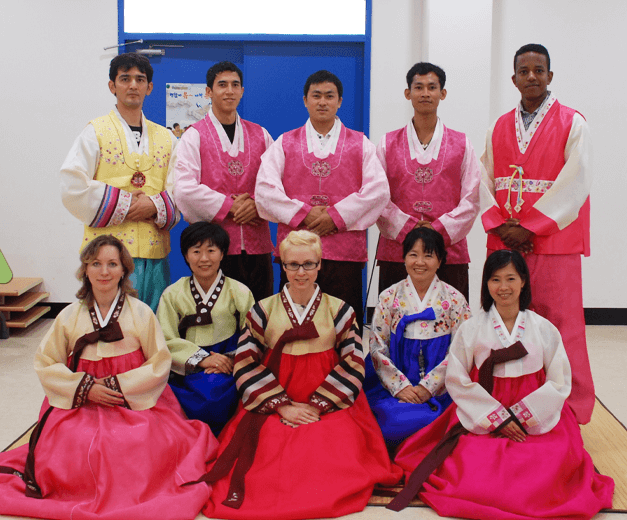
Chuseok program
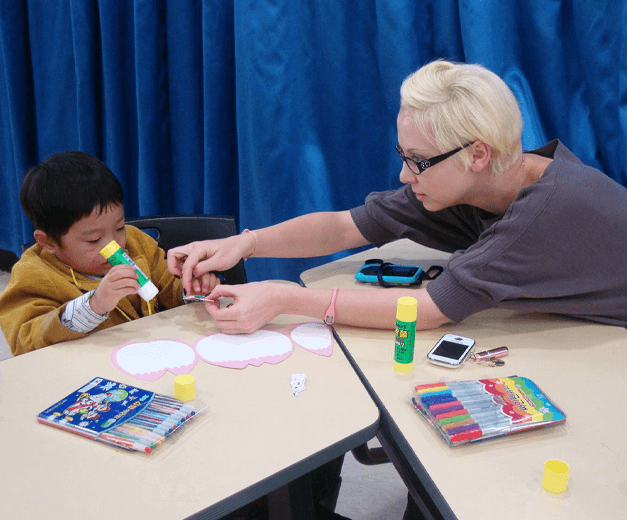
Participating in Shimcheong program
Q1.
Please briefly introduce yourself and your professional field
My name is Virág Hársvölgyi, Ph.D., art historian – art historian teacher – museum educator. I work at Ferenc Hopp Museum of Asiatic Arts (Budapest, Hungary) since 2009. At the beginning I worked there as museum educator, later (after the CPI program) as curator of the Korean Collection, and currently I work in the museum’s Archive Collection.
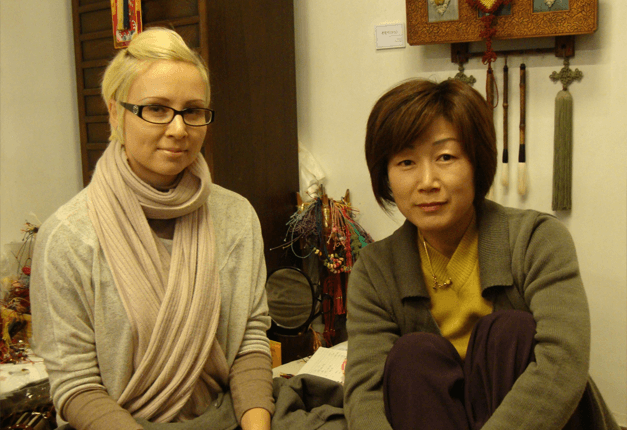
Making dragonfly in Maedeup program
Q3.
What did you learn or experience from the training?
What impressed you the most about the program?
One of the key experience of my professional and personal life was that half year I spent in Korea as the only Hungarian participant of the Cultural Partnership Initiative Program in 2010. I applied for the opportunity as museum educator employee of the Ferenc Hopp Museum of Asiatic Arts (Budapest, Hungary). As a result of the successful application I worked and learned in the National Folk Museum of Korea: three months at the Children’s Museum Division (now The Children’s Museum National Folk Museum of Korea) and three months at Cultural Exchange and Education Division. I was impressed that the whole program was very well organized. The many opportunities I was given were very extensive: participate in the museum’s work, cultural field trips (Heritage Visiting Program), activities, Korean language learning (at Kyung Hee University), etc. I still use the acquired knowledge in my everyday life and in my professional work.
Q2.
What made you decided to join the CPI program?
What did you expect from the program?
The management of my workplace (museum) drew my attention to this possibility, and I applied for the CPI program as museum educator. I wanted to lift our Korean Collection into our museum educational program through activities and hands-on experiences, that’s why I was very interested in the museum’s collections of Korea, its school educational programs and methods which gains people getting close to the arts. I hoped participating in this program can give me unique opportunity to work out modules of our educational programs focusing on Korean traditions, handicrafts and customs which are starting point to understand of culture.
Q4.
Were you able to apply what you learned or experienced
in your current work?
A few words about the last more than ten years: after the CPI program, I returned to my workplace and I started to work in the museum as curator of the Korean Collection and took part in number of professional works: as a co-curator and curator assistant of exhibitions, editor and author of scientific and educational publications (among them I am proud of the first book for youths about Korean culture in Hungarian language), and educator of craft programs primarily in the museum, and several times in the Korean Cultural Centre (Budapest) in the 2010s.
Let me give some concrete examples from the Korean themed exhibitions:
2011–2013 co-curator and museum educator of exhibition titled [The Land of Morning Calm. Korean Art in the 18th–19th century], Ferenc Hopp Museum of Asiatic Arts, Budapest.The accompanying catalogue was the first publication to present the Korean Collection and its photo archive.
In 2016 curator assistant and museum educator of exhibition titled [Imaging Korea – Beyond the people, land and time], Ferenc Hopp Museum of Asiatic Arts, Budapest.
In 2019 curator assistant of a travelling exhibition titled [Korea 1908 – Through the eyes of a Hungarian Medical doctor Dezső Bozóky], Seoul Museum of History, Busan Modern History Museum.
In 2020 co-curator of exhibition titled [Visit to the Land of Morning Calm – Dr Dezső Bozóky’s Korean Photographs] ,Kolta Gallery, Budapest
in 2019–2021 co-curator of [Made in Asia – The Centenary of the Ferenc Hopp Museum of Asiatic Arts] ,Ferenc Hopp Museum of Asiatic Arts, Budapest
Q5.
Have you had any follow-up activities or projects with other trainees, the training institution, or other Korean cultural
and artistic organizations?
From a professional point of view, it was an important opportunity for me to visit Korea again in 2016 and participate in the ROK–V4 (Visegrad Group) Young Professional Cultural Exchange Camp program. And in 2020 something significant happened related to my own photo project I posted on facebook (“re-creation of childhood” and „the story of a found toy doll”): I received a request from The Children’s Museum of National Folk Museum of Korea that they want to use my photos in the exhibition titled Golgory with friends (curated by Kim Mee-Gyeom). Fifteen of my photos were featured in the exhibition (on photo board) and two of them were also published in the exhibition catalogue. See: 국립민속박물관 어린이박물관과 [2020, 편]: 골골이와 인형 친구들. 서울 [The Children’s Museum of National Folk Museum of Korea (2020, ed.): Golgory with friends. Seoul. 93.] ISBN 9788928902545
Virág HÁRSVÖLGYI (Hungary)
2010 CPI Participant
Ferenc Hopp Museum of Asiatic Arts, Budapest / archivist


