CPI Fosters Spirit Of Multiculturalism
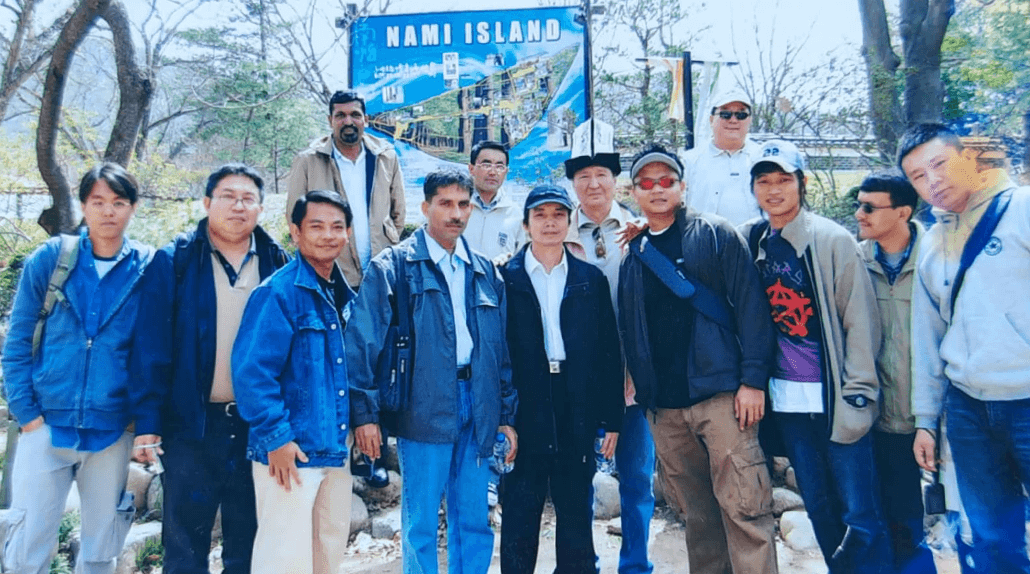
In the evening of September 15, 2006, a joyous mood was palpable in Korean University. It was organising a certificate distribution program for the participants who had completed a six-month-long Korean language course under the Asian Cultural Partnership Initiative (ACPI). This also marked a moment of valediction. A mixed emotion of excitement and pain of separation was running in everyone. We were euphoric because all friends from different countries, including Thailand, Pakistan, Cambodia, the Philippines, Indonesia, Vietnam, Kazakhstan, Laos and Uzbekistan, were gathering there to share a light moment and say goodbye.
We had cultivated a good friendship as we together attended several programs that acquainted us with Korean language, culture, food, music and lifestyle. But next day we were heading to our respective nations. So the jubilant ambiance turned solemn in no time after our Korean language teacher (sansengnism), whose name I forgot now, began sobbing. She affectionately said: “I had been repeatedly asking to study hard but some of you did not secure good grades as expected.” Her mild reproof moved us, but did not bring any resentful feelings because there she was exuding her love and a feeling of amity from the depth of her heart for us. It was precious. She started to weep as we were going to part ways with each other. All of our eyes were teary. She was a dedicated teacher who never bothered in answering our questions. She has left an indelible imprint on my mind.
Cosmopolitan aura
I attended Korean language classes for about four months and also participated in the fellowship of Korean Press Foundation (KPF). My stay in South Korea remained highly fruitful. I experienced a cosmopolitan aura as the program served as a platform of interactions among participants having diverse nationalities and cultural backgrounds. I learnt Korean language to some extent, made Kimchi, relished Korean food and music, visited many cultural sites and watched the World Cup 2006 on a big television screen displayed in the open with thousands of Korean soccer fans. I then came to know how crazy Koreans are about football games!
At one occasion, I enjoyed Indonesian, Cambodian, and the Philippines dishes prepared by my chef friends from these countries. There came a time when I had to walk down a ramp with a Vietnamese female fellow, wearing my national dress – daura, suruwal and topi. It was really a strange experience for a shy guy like me. These activities aimed at nurturing friendship and cooperation among the fellows. The interactive activities attest the fact that culture plays an enabling role to foster mutual and harmonious bond. I proudly tell my friends that I could write down around two pages in Korean language. At the farewell program organised inside of KPF building, I had read out a speech that I wrote in Korean language with the help of Korean friends. Alas! Today I can’t write in Korean language in lack of practice.
Another impression that I collected is that Korea wants to promote two-way interactions among the cultures of different nations. Under the Cultural Partnership Initiative (CPI), the participants, who came from Asia, Africa, Europe and Latin America did not only get familiarised with the culture of Korea but they had also an opportunity to present their own skill, talent, dress, music, food and cultural norms in the host country. They were able to enhance their ability to design and implement cultural projects and build global partnerships, thereby contributing to expanding the cultural industry across the globe. This is indeed a unique feature of the CPI.
Here I would like to quote Lee Soo-Myoung, who was Deputy Director at the Cultural Policy Division under the Ministry of Culture and Tourism, South Korea in 2006. He said: “The ACPI is an interactive cultural exchange project, in which people from Asian countries will experience Korean culture and introduce their own cultures to Koreans.” I have included his remark in my news report entitled ‘‘South Korea for Cultural Ties with Asian Countries”. In view of growing conflicts, wars and political polarisation, South Korea’s initiative to maintain harmony and bonhomie through the cultural exchanges is praiseworthy and deserves to be replicated in other countries.
During my six-month stay in Korea, I had published at least nine exclusive reports on diverse issues of Korea in my newspaper, The Rising Nepal, the oldest English daily of Nepal. The topics of the news reports included culture, civil society movement, economy, politics, media reforms, job market, labour quotas for foreign workers, Red Devils (the soccer fans of South Korea) and Nepal-South Korea relations.
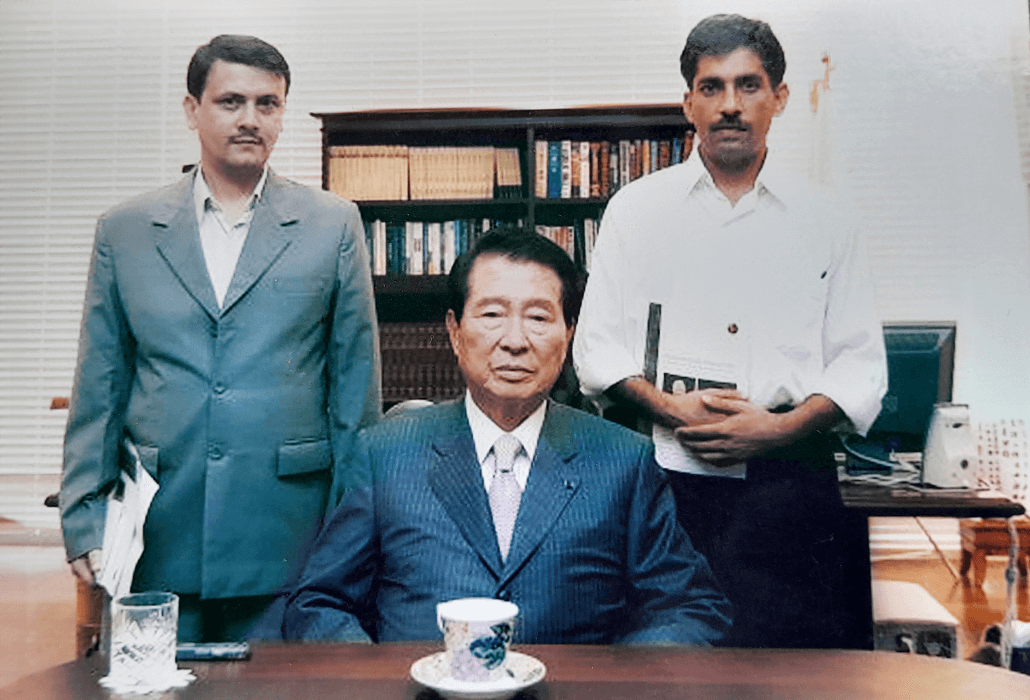
Here I would like to mention an interview with former South Korean president Kim Dae Jung. It was my lifetime experience. After sending proposal to the Kim Dae Jung Foundation, former South Korean president and Nobel laureate granted an interview to two journalists from Nepal and Pakistan. It featured South Korea-North Korea ties, his democratic struggles and Nepal’s democratic movement. I received a good feedback from my friends and readers after his interview was published in my newspaper.
I have another memorable moment. While staying in Korea, I had studied some books from the library of Korean University on recent Korean history and war, political movements and, more importantly, its economic feat and mesmerising modernisation. Besides, I solicited the opinions of Korean professors, experts and students to have a nuanced understanding of miracles of Han River. Then, I jotted down a working paper entitled ‘A Rise of Phoenix from Ashes of Wars’ which was presented at a seminar attended by the KPF officials as well as fellows from different countries.
Professional aptitude
The CPI program benefited me in several ways - broadened my journalistic perspective and international networks. While participating in the ACPI, I was also a fellow of South Asia Journalist Fellowship Program (SAJFP) under the KPF. It provided me an opportunity to hone my professional skill, enlarge my horizon of knowledge and boost my confidence essential to enhance the newsroom performance. I came to know from close quarters about the South Korean history, economy, society and culture. I have shared my experiences and learning with my colleagues and seniors which have indeed helped spread correct information about South Korea, thereby building Korea’s positive image in my office and beyond.
The CPI grew my interest in Korea’s social and economic trends even after returning from there. I wrote articles on different Korean issues, enabling the Nepali readers to know more about Korea. I would like to suggest forming an alumni of CPI fellows in each country at the initiative of the concerned Korean diplomatic missions. The CPI participants can serve as cultural envoys between the host and the country of CPI fellows.
Ten years ago, I had an opportunity to participate in ‘CPI Homecoming Day’ organised on the occasion of its 10th anniversary. Last year, I joined CPI Online Reunion that acquainted me with new CPI participants. On the occasion of CPI’s 20th anniversary, I am excited to share a personal reflection on my experiences, which is really a trip down the memory lane. I believe that the event will be instrumental in further advancing the goals of the CPI. It will set another milestone in fostering the ideas and values of multiculturalism.
Ritu Raj Subedi (Nepal)
2006 CPI Participant
Deputy Executive Editor of The Rising Nepal, an English daily from Nepal


