Interview with RizaKirac
Q1.
Please briefly introduce yourself and your professional field.
My name is Rıza Kıraç. I was born in Istanbul. I studied cinema at the master's level. I wrote novels, stories, biographies, film critiques and film theory books. My literature and cinema books were published by the most important publishing houses in Turkey. In addition to my literature books, I also work as a film director and screenwriter. I wrote the scripts of three documentary films, three feature films, and directed and produced one feature film. I wrote cinema, literature and culture articles in newspapers and magazines for many years. I taught scriptwriting and film directing courses at universities and various associations. In addition to these jobs, I have been providing editorial services to writers for a while.
Q2.
What made you decided to join the CPI program? What did you expect from the program?
I have been curious about Korea since my childhood. Because we had a neighbour who fought in the Korean Civil War and later became a carpenter. I still remember some of the memories he told me about Korea. However, after I became interested in cinema, I followed the films of South Korean directors with special interest at film festivals. I did not have much knowledge about Korean literature and daily life. I thought that with the CPI program, I would have the opportunity to learn about South Korean culture, lifestyle, writers and artists firsthand. And that is exactly what happened.
I had the chance to meet many people during my 4-month stay in Seoul. In my conversations with business people, students and writers, I saw that Koreans have a special love for Turks.
Q3.
What did you learn or experience from the training?
What impressed you the most about the program?
After going to South Korea in 2005, I lived in Seoul for 4 months. This was a great experience for me because I had never been to any country in the Far East before.
Thanks to this trip, I saw how great an economy South Korea has in technology, informatics and industry. I saw that South Koreans produce the products needed in every area of life themselves.
I had the opportunity to visit many cities including Busan with various activities and to follow film and literature festivals. I visited the website where the publishing houses are located in Seoul with the help of writer and translator Nana Lee. I learned Korean language at Seoul University for about 2 months. The experience at Seoul University was very important, I had the opportunity to meet and exchange culturally with not only Korean students but also many young people and artists from Vietnam, Malaysia, China, Japan and America.
During a lot trips made with the CPI program, I realized that I was participating in a cultural exchange program that included writers, painters and athletes from many countries of the world, not just Turkey. I watched the South Korean Tea Ceremony and wedding tradition. I learned about South Korea’s political and cultural history both from books and by visiting various museums. When I shared my knowledge of Turkish literature and cinema with Korean students at various universities, I saw that young people were also curious about Turkey. I objectively shared my knowledge of both Turkish literature and cinema.
I participated in the Asia Literature Form in 2005 and presented an article titled “Voice of Conscience.” This work was very important to me because I had the opportunity to meet with writers from many countries. Our articles were translated into Korean and English.
During my time in Seoul, I tried to understand their perspectives on life, literature, politics, and art in general by talking to Korean writers at every opportunity.
During this time, I had the opportunity to read the novels of Kim Young-Ha, Yi Mun-Yol, and Chong Chun Lee.
I admired the work discipline of the friends who organized the CPI program and the effort they made to make us writers comfortable. The flawless operation of the 4-month program brought me to a level where I could talk about Korean culture.
With the Korean lessons I took at Seoul University and my experiences in daily life, I was just starting to speak Korean when, unfortunately the CPI program ended and I had to return to Turkey.
Q4.
How has your experience changed after participating in the training?
I started writing about my experiences in South Korea before I even returned to Turkey. For example, I published an article about the Busan Film Festival in a daily newspaper. Following this article, I published another article about Korean culture, economy and lifestyle in the same newspaper.
I visited Chong Chun Lee, one of the most important writers of Korean literature, at his home with my dear Nana Lee. I had read his novel Io Island and a few of his stories. The long conversation we had with Chong Chun Lee naturally turned into an interview and was published in a literary magazine published in Korea. I still have the novel and a book poster that Chong Chun Lee signed on the day we met and chatted.
I was also asked to write a foreword for the children's book "Vanilla Scented Letters" by Sevim Ak, one of the important writers of children's literature. I had the opportunity to write a foreword about the importance of fairy tale narrative in Turkey for the book, which has the distinction of being a modern fairy tale.
After returning to Istanbul, I wrote a script called "Far Away Breakfast" with the support of the Ministry of Culture in Turkey. The story of this script started in Turkey, continued in Germany and ended in Korea. I tried to turn this script, whose story I loved, into a film, but I couldn't find a producer for the project because it was an extremely expensive production.
Q5.
Did you form any lasting relationships or networks from the program?
How have those connections been beneficial?
Participating in the CPI program and living in Seoul helped me make friends with Korea. We never stopped communicating with Nana Lee, who translates from Turkish to Korean. I tried to help her with her work in Turkey.
Also, the Korean Ministry of Culture, the Literature Translation Institute of Korea, and the magazine Korean Literature Now contact me when needed.
However, unfortunately, I could not continue my communication with the people from different countries I met in Seoul.
Q6.
Would recommend the CPI to other cultural professionals?
Is there anything else you want to share about CPI?
Sometimes, artists and students from Korea communicate with me upon the recommendation of my friends about Korea. I try to help them with their work in Istanbul.
I assisted in the events organized by the Literature Translation Institute of Korea, the Korean Ministry of Culture and the Korean Writers Association in Turkey. For example, I took part in the Korea Week event held in Ankara, the capital of Turkey, on October 12-22, 2011. I acted as the spokesperson for Turkish writers at the symposium titled “Korea-Turkey One Hundred Years of Contemporary Literature, for Understanding and Communication”. I also made presentations from my own works in this event.
I assisted in the events organized by the Korean Ministry of Culture and the Literature Translation Institute of Korea at TÜYAP, Turkey’s largest book fair. The first of these was a study where sections from the works of four Korean writers were read. While organizing the writer and theatre actor friends to read the works in this event, I took on the role of moderator of the event. This event was the first time Turkish literature lovers met Korean writers face to face.
In 2014, I was invited to the Seoul International Writers’ Festival. Sections from my novels “Dolphin Video” and “My Father Died Without Knowing Freud” were published in the festival’s anthology book. The festival’s theme was “Eros and Dream.” I made a presentation at the Seoul International Writers’ Festival about how love and dreams can help creativity in literature.
Another effort was to shoot a video of the events of South Korea, the Guest of Honor at the TÜYAP İstanbul Book Fair in 2017, upon the request of Korean friends. Thanks to the events held at the Book Fair, I met Korean poets and writers. In addition, we conducted an open interview with Honggyu Son, whose novel Turkish name “Başka Topraklarda Rüzgar Sert Eser” was translated into Turkish at the TÜYAP Book Fair.
Cheon Myeong-kwan’s novel “Whale” was translated into Turkish by Tayfun Kartav. In 2022, upon the request of Korean Literature Now magazine, I wrote an article introducing the author's novel “Whale” in the magazine's 58th issue.
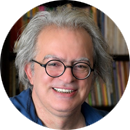
Rıza Kıraç (Turkey)
2005 CPI Participant
writer and film director and screenwriter


