Ladda Kongdach from Thailand

01. Could you introduce yourself?
‘Sawasdee - Hello’
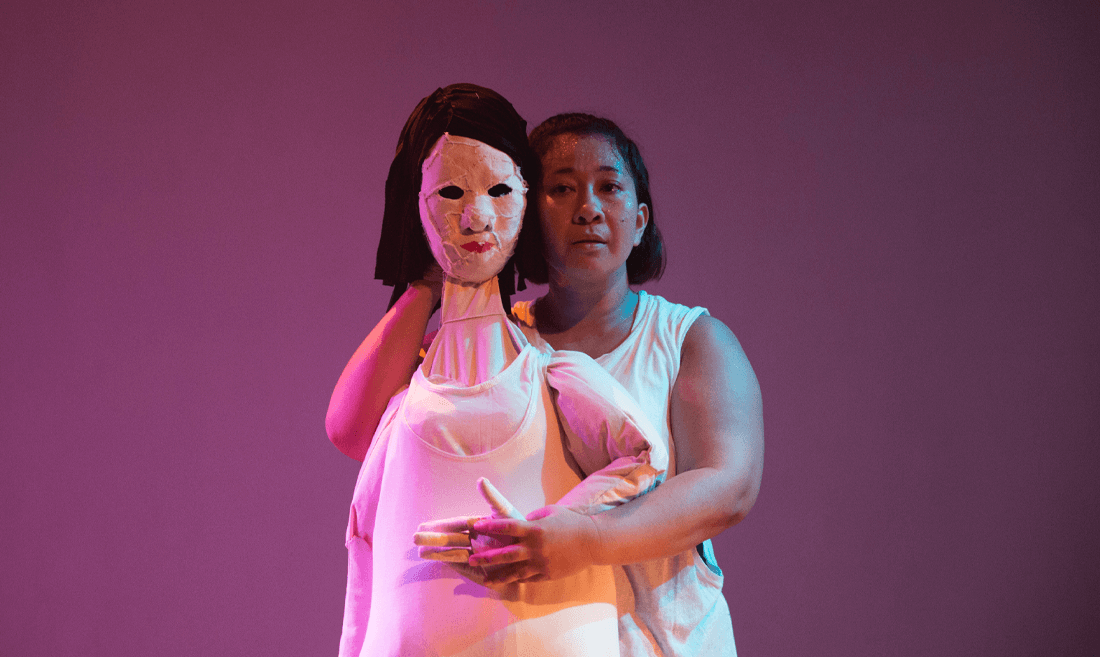
My name is Ladda Kongdach, an artist from Thailand. I graduated with a theatre major from the Faculty of Arts, Silpakorn University where the study is focused on all processes of theatre-making in a realistic style. I also studied puppets and movement, and I found out that I was quite interested in them since then.
In 2010, I became a member of the Crescent Moon Theatre, which was officially formed in 1975. The Crescent Moon Theatre aims to create theatre art that reflects society and the people living in it. We approach our work using the process of devising theatre and presenting our work through body expression. We use group dynamics to make other elements on the stage, such as the scenery and props, come to life. We want the audience to think and ask questions about what they see before them. Our work combines Bertolt Brecht’s techniques, Jerzy Grotowski’s Poor Theatre, and Wolfram Mehring‘s movement methods, with the help of Kamron Gunatilaka, who is our teacher, mentor, and the founder of the Crescent Moon. Now we practice more with devising process, butoh, and view-point techniques. We love to create our work, and we believe that theatre is a practice that never ends and that theatre is the link between people. At the present, Sineenadh Keitprapai is the Artistic Director.
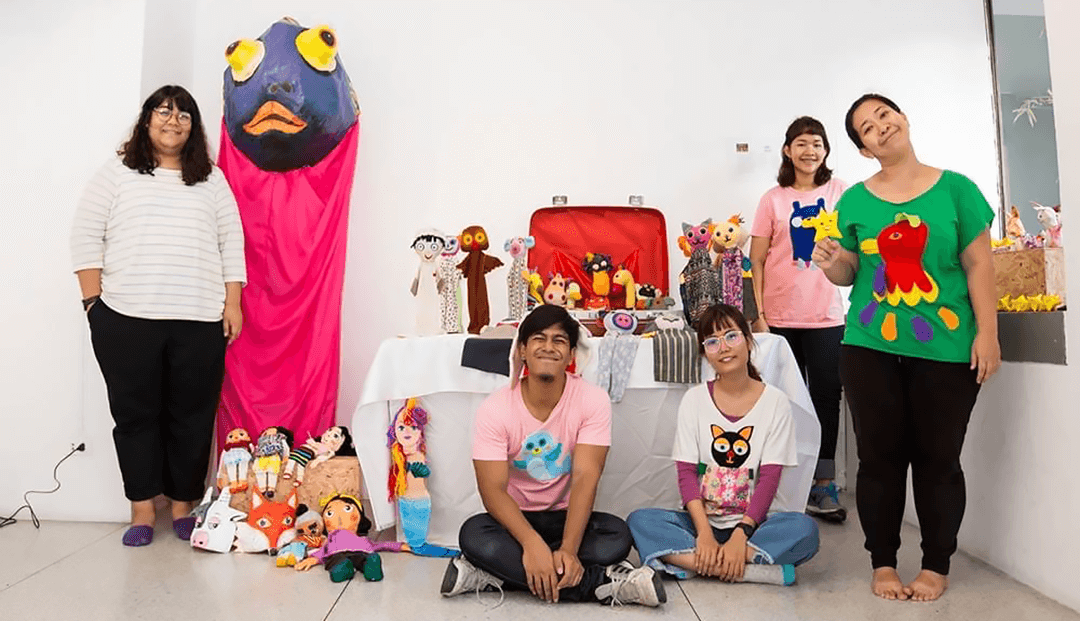
I worked as a performer, producer, international coordinator, and director for different projects. After a few years, I began my career as an artistic director at the Yayhoon Puppet Theatre (Grandma Puppet Theatre), a puppet theater project under the Crescent Moon Theatre. I created a performance based on the idea that “Puppets are the best friends of children,” and I always break the 4th wall and try to create a space that connects the audience and the performers together, whether human or puppet. Besides puppet theatre-making, I also teach how to make and manipulate puppets in workshops or classes.
I had experiences with artists in residency and collaboration with international artists, such as the 2014 Tutbat Arts Residency Rediscovery of Puppet at Performance Group Tuida, Hwachoen, South Korea; The ASSITEJ Next Generation 2015-2016 and 2018 in Tokyo, Japan; the China Children Theatre Festival 2018 in Beijing, China; Rica Rica Festa in Okinawa, Japan; and the Asia Butoh Tree Project 2018 - 2020 in Japan, Thailand, and Indonesia.
The Artist-in Residency Program is a great chance and opportunity to learn more skills by joining the workshop and watching a variety of great performances in a foreign country. I also had a chance to collaborate with artists from different countries and cultures: the international exchange program “Mai Pen Rai Project: Seoul – Bangkok” which was led by myself and Korean artists who I met in the residency; and the “Flower and Butterfly” puppet theatre that I collaborate with a Korean Puppeteer.
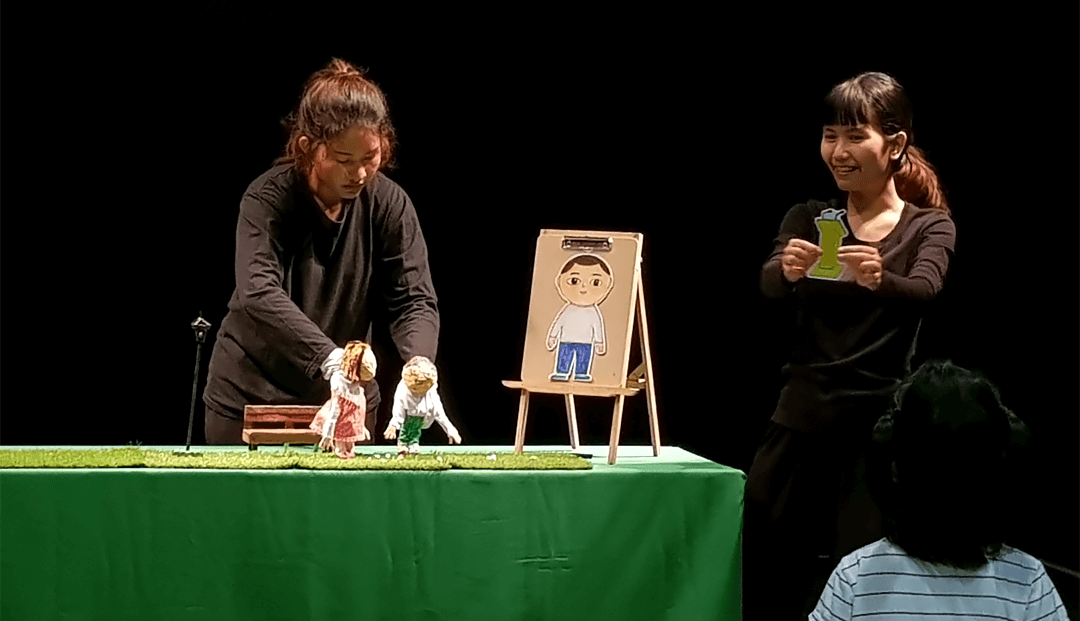
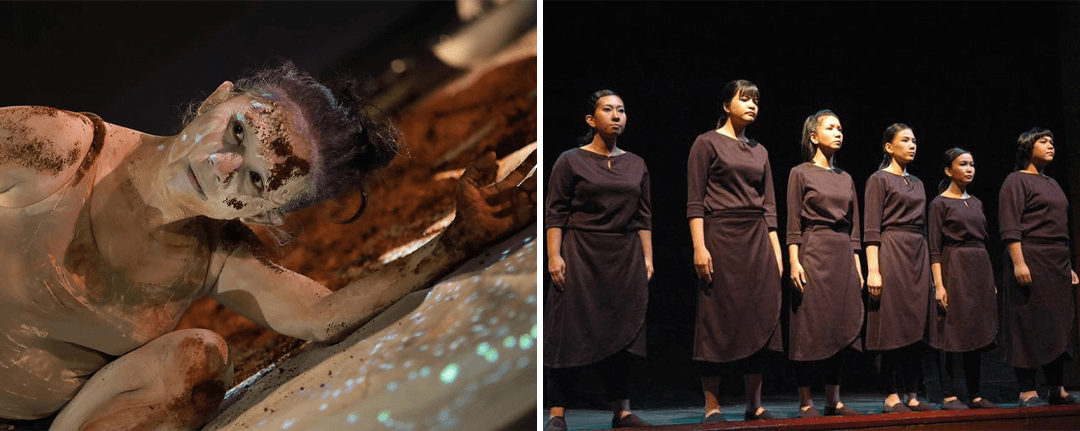
From 2017 until now, I have been focusing on the following two areas: the Butoh performance and the theater for young audience (ages of 0 to 3). In 2019, I first initiated the Babies Theater in Thailand. The theater was very new for the Thai audience, but they were very interested, and I received positive responses from the audience.
The first production was “Purr Purring: The happiness of a Non-Story.” We created a space where children can walk through and play with the sound and simple movement that performers create on the stage. We used the theory of the brain’s development as the base and used creativity to create movement and art direction. Following the performance, we held a post-show talk to share and educate the audience about “how” and “why” we should take children to the theatre.
Unfortunately, we could not hold another show after 2019 due to the COVID-19 pandemic, but we plan to have a new production of Babies Theatre in 2023.
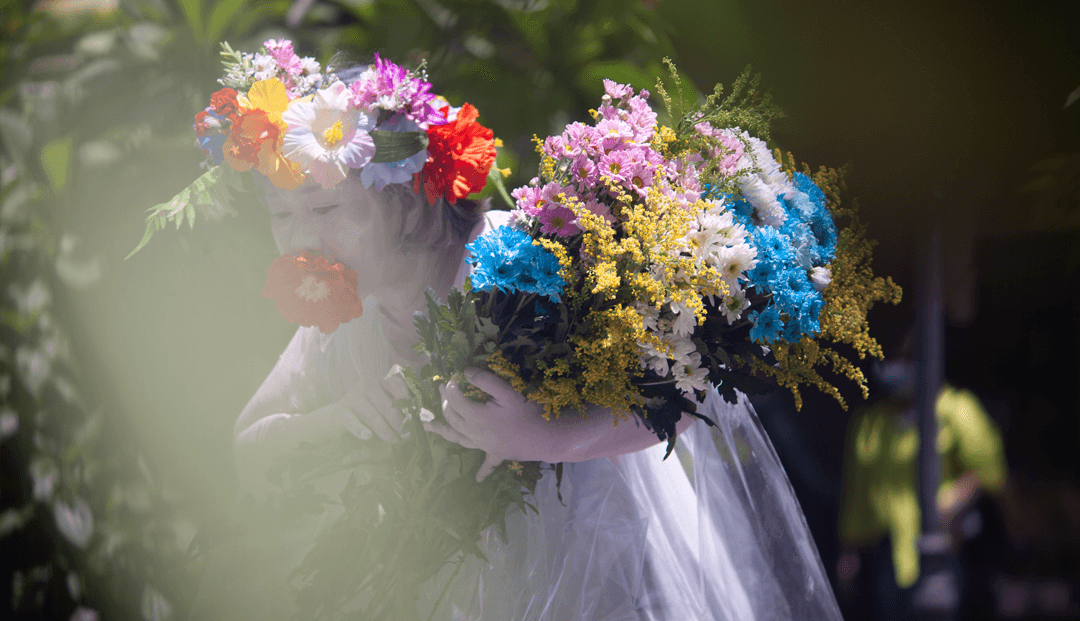
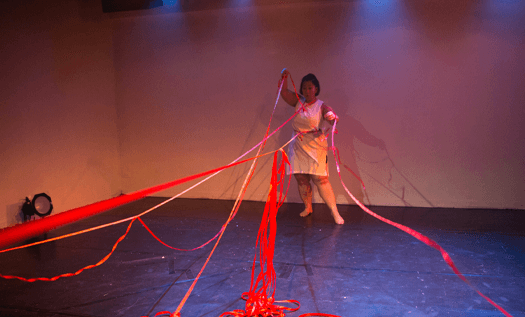
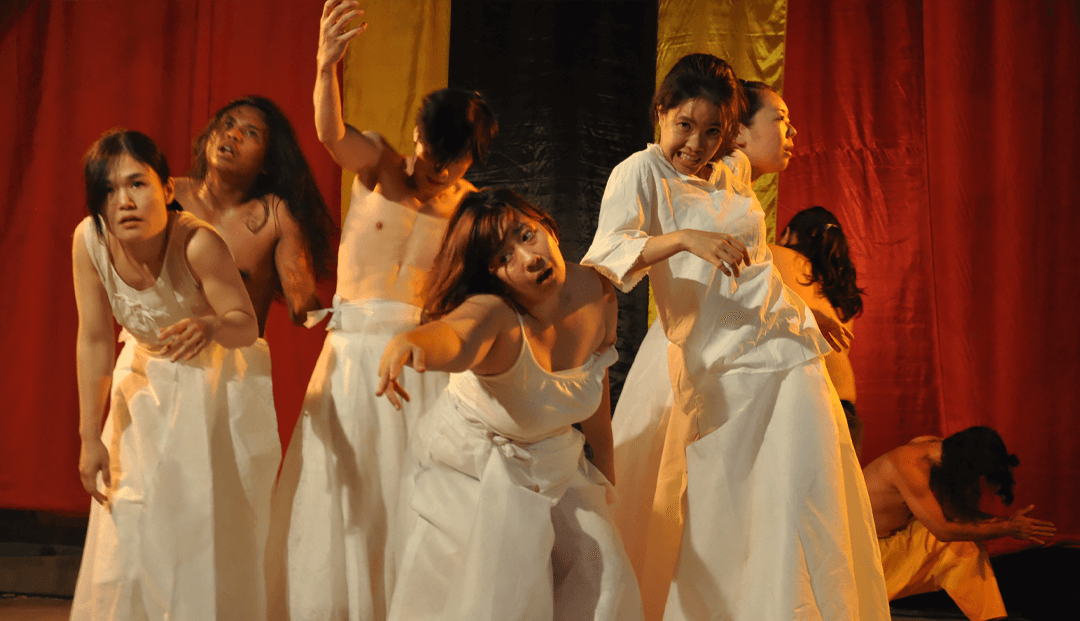
I was trained in movement expression and Butoh by the director Sineenadh at first. After I joined the Asia Butoh Tree Project in 2018, I was trained by Yuko Kawamoto who is the director of Shinonome butoh. I love the unlimited possibility in expressing images, imagination, emotions, stories, words, poetry, and more through our bodies. I believe that regardless of body type, age, and artistic ability, anybody can do and enjoy Butoh. I also see the potential and possibility to use Butoh in Theatre For The Young Audience and continue to work on it.
02. What made you participate in the CPI program and how do you think about the program?
Since I participated in Artist in Residency Program in 2014 at Hwachon, South Korea, I found that Korean artists are skillful and have a strong passion to perform art. I was curious as to why and what makes artists in Thailand and artists in Korea different. In my opinion, “opportunity” is the word that can answer the question, and it also explains the main idea of the program. The CPI program is the opportunity that Korea gives to other countries to let artists of different backgrounds to learn more about arts and culture and see more possibilities to work and initiate as an artist and curators. The value of this program is not just that we came to be trained in Korea but also that we met and were surrounded by artists and people in the art and cultural scene, which was very inspiring and encouraging.
03. What is your future plan after the conclusion of CPI program?
Currently, I mainly perform in theatre for babies and Butoh performances. After I participated in CPI Program and trained with Trust Dance Theatre, I became interested in theatre for people with disabilities. The Trust Dance Theatre is a pioneer and expert in this field, and their curriculum has various prospects and ideas that can be the starting point of which I wish I can work on it.


