National Folk Museum of Korea
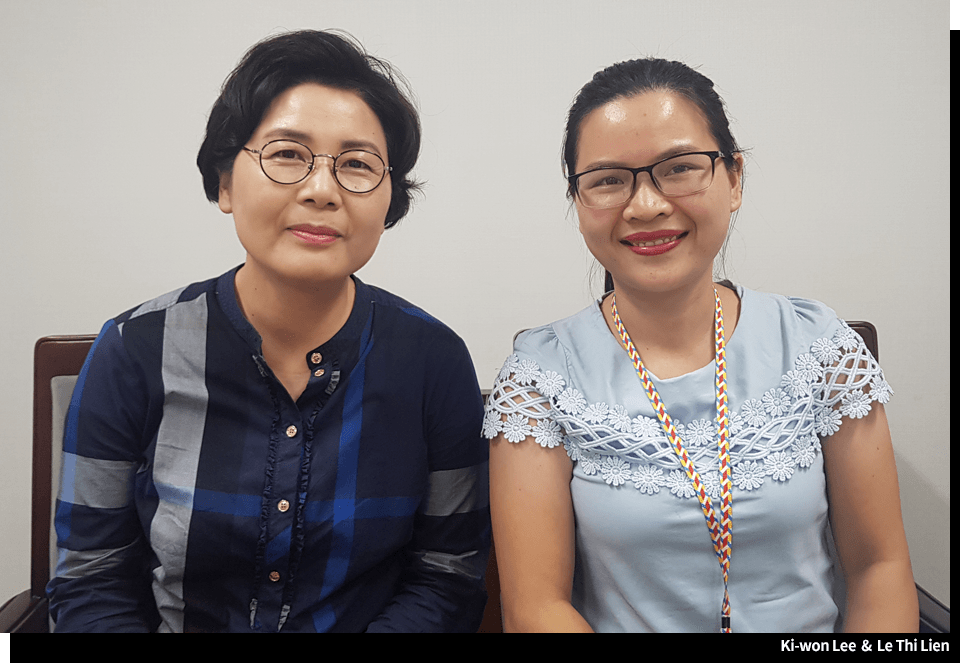
Le Thi Lien & Ki-won Lee
The Cultural Partnership Initiative (CPI) program, the three to five month—long cultural training program, invites 60 participants from 27 nations this year.
Each participating organization has a slightly different schedule, and we had a chance to meet Lee Ki-won, the Deputy Director of the National Folk Museum of Korea and Le Thi Lien, the CPI participant of the organization.


Could you briefly introduce yourselves?
I am the Deputy Director of the International Relations and PR at the National Folk Museum of Korea. I have been in charge of the CPI program since 2006.
I am from Hanoi, Vietnam, working as an educator at the Vietnam National Museum of History.
Even though I am a mother to my nine-year-old daughter and four-year-old son, I did not hesitate to apply for the CPI program because of its great reputation and excellent curriculum.
At the Vietnam National Museum of History, we already have five CPI graduates. I am happy to be given an opportunity to train at the National Folk Museum of Korea as a museum educator.
How long have you been working at the Vietnam National Museum of History,? What motivated you to participate in the CPI program?
I have been working there for eight years. My work includes developing and organizing educational programs at the museum. We usually orchestrate educational programs for diverse visitors, including middle and high school students, and sometimes we directly give lectures at schools.
The CPI program, including the fellowship, has a great range of activities for participants. Hence, I strongly believe that the program would help me network with other museums around the world.
Is there any policy for the National Folk Museum of Korea to select participants for the CPI program?
When selecting participants, we consider how the museum and participants contribute to each other in reciprocal way.
This year, we decided to invite a participant from Vietnam to conduct a collaborative project entitled the Culture Discovery Box.
The Culture Discovery Box project started from an idea that South Korea, the country that is rapidly becoming a culturally diverse society, is responsible for providing multicultural children with proper cultural education. The box contains a variety of cultural items, including historical and cultural ones including popular children’s stories from each country.
We made cultural boxes for ten countries, including Vietnam, India, Thailand, and the Philippines, and have distributed them to local schools and immigration centers. The Vietnamese cultural box was created 10 years ago.
In 2019, we plan to update the Vietnamese cultural box. Therefore, it will be great for us to host a participant whose expertise focuses on Vietnam and education.
What is the most distinctive difference between the National Folk Museum of Korea and the Vietnam National Museum of History?
Even though the two institutions share similar features regarding research and exhibition, I think the biggest difference lays in the content.
While the Vietnam National Museum of History, focuses on the official history from the past to the present, the National Folk Museum of Korea captures the sentiment of the daily lives of Koreans from the past to the present.
Second, the National Folk Museum of Korea has terrific customized programs for different ages and social groups. Hence, it seems to me that there is more interaction with museum visitors here.
I am willing to apply these positive features to our museum in Vietnam.
Do you have any ideas to increase exchange and collaboration between the Korean and Vietnamese museums?
Of course, I have plenty of ideas. I am interested in organizing a collaborative exhibition featuring the daily lives of South Korea and Vietnam, or a conference about museum educational programs.
The National Folk Museum of Korea has been participating in the CPI program since 2006. Do you find any influential or fruitful outcome to your museum?
Over the years, we have seen our former participants starting great programs in their home countries after completing the CPI program.
For example, in 2008, one participant became a director of the National Gallery of Thailand and helped us create the Thai Cultural Box. Another participant proposed to install a Korean culture exhibition room at the National Ethnographic Museum in Warsaw.
In 2017, we invited five outstanding CPI alumni to our tenth-anniversary workshop. In the workshop, we discussed diverse formations of projects to make the CPI program more effective. Participants presented how they understood and reflected the outcome of the CPI training and how they aimed to collaborate with the National Folk Museum of Korea.
Overall, the CPI is an excellent program that contributes to establishing the infrastructure for international cultural exchange.
What is your goal as a participant in this year’s training program?
I would like to visit many museums and galleries to experience South Korean culture, history, and language. Then, I aim to write a research report about the youth and child educational programs of National Folk Museum of Korea, and then ultimately want to create such programs in Vietnam.
I am truly grateful for the amazing opportunity to participate in this international training program and learn useful skills.
The deputy director Lee, is there any comments you want to say to Lien?
I hope you enjoy experiencing Korean culture and history.
Furthermore, it will be great for her to learn how the National Folk Museum of Korea designs and orchestrates educational programs since she herself is an educator. I hope she can later apply what she learns here to Museum in Vietnam.


