Lê Hà Giang from Vietnam  &
Hyangmi Lee from Republic of Korea
&
Hyangmi Lee from Republic of Korea 
Guro Cultural Foundation
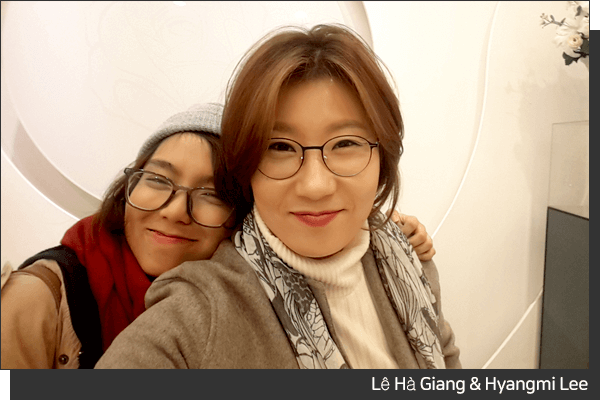
Guro Cultural Foundation or GCF has invited CPI participants from Vietnam for two consecutive years in order to run the programs on culture. The programs are intended to nurture cultural planners who can rediscover the value of local culture and the culture of communities. Lê Hà Giang participated in CPI of Guro cultural foundation last year and has attended as a staff in CPI this year. Hyangmi Lee has participated as a staff of CPI in Guro since last year.
QPlease introduce yourself briefly.
Lê Hà Giang(Giang): Hello, I am Giang from Vietnam. I have participated in CPI last year and am working as CPI staff this year while attending Korea University to continue to learn Korean language.
Hyangmi Lee(Lee): Hello, I am planning for culture tour programs and developing contents for culture tour programs called Maeul-danim. The purpose of my tour programs is not only about making money but is about connecting people through travelling and promoting cultural exchanges. As I have been based in Guro, I had a chance to participate in CPI with Guro Cultural Foundation.
QWhat activities have you been doing in your home country?
Giang: I majored Mass Communication at University of Social Sciences and Humanities in Vietnam and have planned cultural festivals in Korean Study Club. After graduation, I worked as contents writer in the PR department at Naver, Hanoi and have joined CPI before coming here as a student.
Lee: I began the project on fair travelling in Guro. As I was based in Guro, I found that many people see Guro as an area that is less developed or not popular. However, I knew that Guro also has a lot of energy as a place of historical importance with Guro Industrial Park and other industrial facilities. Therefore, I have been doing a lot of activities to exhibit diverse, positive aspects of Guro through tour programs.
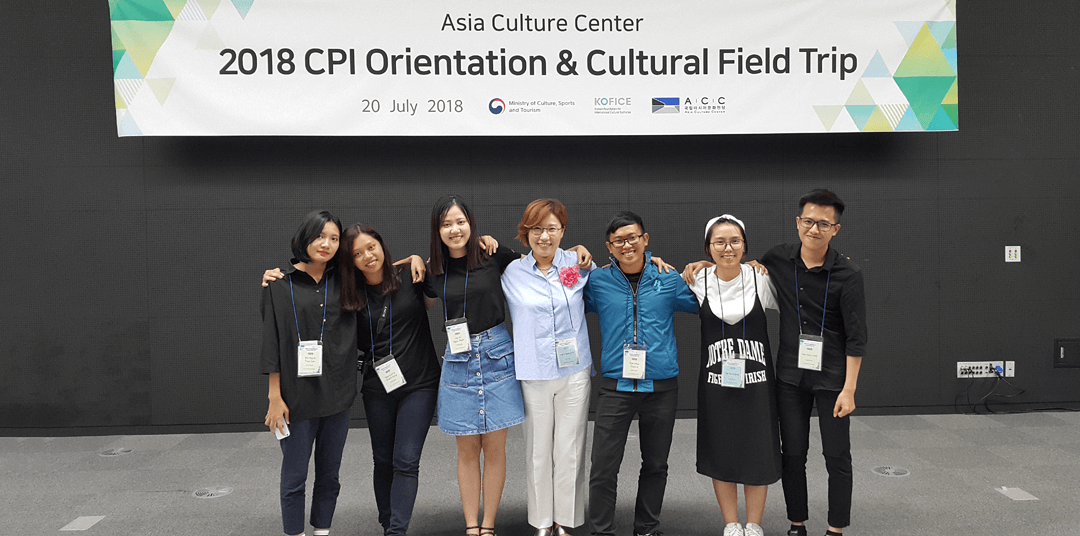
QHow did you come to participate in the CPI?
Giang: When I was studying Korean language at Sejong Center in Hanoi, my Korean teacher recommended CPI for me. As I have been a great fan of Korean music, drama and culture, I knew how Korea is today. And I decided to join CPI in order to know more about Korean history, society and Korean people through the program.
Lee: Many private culture and art groups in Guro area share the common value of culture community instead of pursuing profit only. We have been discussing how to conserve, discover, expand and reinvigorate local cultural resources in order to find positive solutions. Our activities to find and preserve cultural value have brought great sense of pride to them as well.
I decided to participate CPI because I believe CPI is a great opportunity of culture exchanges as foreign visitors can join our activities, experience how to appreciate local culture and historical resources, and can share the experiences when they go back to their own countries.
It would be great if traditional and contemporary Korean culture is introduced to other regions with the Korean Wave which refers to the popularity of Korean culture. At the same time, I also believe that it is important to share how Koreans see the value of historic and local communities. That is another reason why I applied for CPI last time. Although I had my share of trial and error, I found it very rewarding and decided to apply for CPI this year again.
QWhy has Guro city participated in CPI program? What do you want to achieve through the program?
Lee: Contrary to negative images associated with Guro, the region is based on cultural diversity and there have been significant efforts to spread the value of Guro’s culture. Culture and Art Cooperative in Guro has published 4 picture books about the region and my travel group developed Guro trips that are described in those books. Also, Culture Foundation created theater programs based on the stories and formed a single project called Art Tracking.
We have also discovered Vietnamese Women’s’ Group in Ansan city through CPI. I hope that CPI can help other communities to bring more energy to them and to experience various activities inside Guro area. This is why Guro City joins CPI as well in order to have positive influence on these communities.
QWhat activities have you been doing in Guro Cultural Foundation?
Could you tell us the project you have been in charge of?
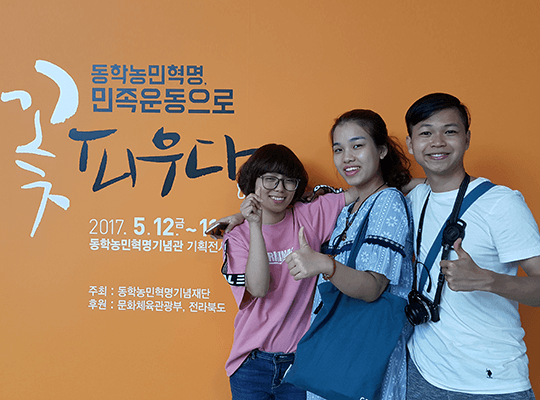
Giang: Last year, I visited Guro Market and Industrial Park to learn more about Korean history. I did not know about them when I was in Vietnam. Unfortunately, I missed some details because my Korean language was at an elementary level last year, but the experience was a great eye-opener for me to learn new things about Korean culture.
This year, I am working as a staffer and bridge between CPI participants and instructors from Guro Cultural Foundation. Based on my experiences last year, I am helping CPI participants as I know what would be their biggest concerns. They have to come up with results in a short period of time while working hard to get adjusted to life in a foreign country.
This year, I am also in charge of issuing a magazine to report the results and I would also like to share the result of a training program participated by 5 friends across the areas of PR, marketing and planning.
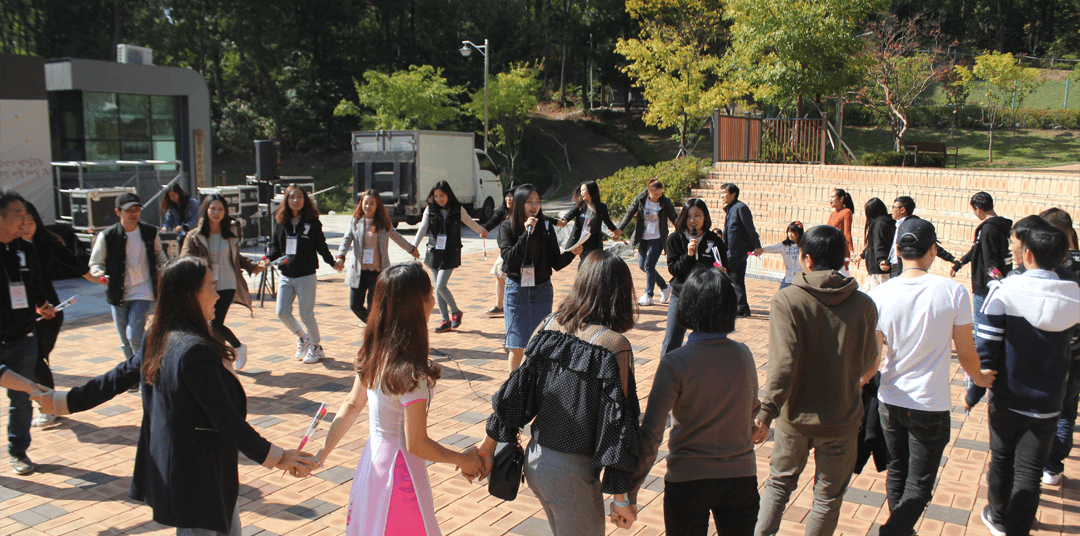
Lee: Guro Cultural Foundation makes an overall planning with me and conducts administrative works. I am running a field training program. The program has weekly curriculum and is focused on hands-on training as opposed to textbooks as it is important for cultural planning experts to have field experiences.
As culture planning requires people to work together with someone else, the program gives chances to participants to plan and execute cultural programs based on their sense of identity. I am helping the participants to complete the program from the beginning to the end.
QWhat is the difference from participating as a CPI participant and as a staff?
Giang: Last year, I was more focused on experiencing Korea culture myself. But I am more keen on how to better help 5 participants this year. I want to find a better way to serve as solid bridge and connecter between those 5 participants and staff in the program.
QWhat was the most difficulty in managing the program?
Giang: There are 5 CPI participants this year and they have different culture and language. They have been growing up in different culture and background. As such, my biggest challenge is to make sure that they meet in the middle ground and work on the project in a harmonious way. I wish I had more time and spoke better Korean language to communicate well with both CPI participants and staff in the program.
Lee: As Giang said, 5 CPI participants from different countries have to work together to complete the program. So, we have been very keen on relationship management across the entire CPI. It is not always easy to encourage them so that they can achieve their own goals. I think relationship is always a key to successful projects.
QPlease tell us your thoughts on participating in the program and a proposal for CPI program.
Giang I would like to thank CPI first of all. Luckily, I was able to talk to Koreans while participating CPI last year. This helped me a lot in learning Korean language as well. Before CPI, I learned Korean culture only through TVs or the internet, but I could visit Guro Industrial Complex and Guro market through CPI. It gave me the chance to directly experience Korean culture and Korean history in the field. In the future, I hope that more opportunities are given so that CPI participants working with different organizers can get together and meet with each other as well.
Lee Many local organizations and foundations want to do projects with foreigners. Those relationships however, are not always fair as foreigners are usually either travelers or beneficiaries of various programs. Yet, CPI puts everyone on an equal footing and I think it is a big strength of CPI.
In the future, I wish that programs will become more depending on the characteristics of each entity. For example, culture planning and research program can be extended to 6 to 9 months as these programs need more field trainings. I believe the quality of programs can improve further if more time is given to participants. The success of these programs can encourage participants further so that they can apply for another round of programs. I was very glad when CPI participants from Vietnam invited Korean counterparts once they went back to their home country. They have actually planned for a tour program for us and this was a very rewarding experience for me as a participant to CPI.


