Royce Lyssah Malabonga from Philippines 
International Information and Networking Centre for Intangible Cultural Heritage in the Asia-Pacific Region
QPlease introduce yourself briefly.
I am Royce Lyssah Malabonga, my home country is the Philippines. I’m an independent intangible cultural heritage researcher. Through an Erasmus Mundus scholarship grant, I pursued a Joint Master’s Degree in Dynamics of Cultural Landscapes and Heritage Management which involved universities and museums in Europe – Muséum National d'Histoire Naturelle-Sorbonne Universités and Musée de l'Homme(Paris, France); Università degli Studi di Napoli Federico II(Naples, Italy); Instituto Politecnico de Tomar(Tomar, Portugal); and Université Jean Monnet(Saint Etienne, France).
After finishing my master’s degree, I co‐founded Sraya Kultura, a socio-cultural startup geared towards transforming cultural heritage as driver for sustainable development in Southeast Asia.
QWhat activities have you been doing in your home country?
In the Philippines, I conduct researches regarding cultural heritage. I was able to do a research about one of the country’s languages that is listed at UNESCO’s Atlas of the World’s Languages in Danger, the Ayta Alabat Island language. I also did an evaluation research for the Prince Claus fund regarding the Rehabilitation of the Rice Terraces of the Philippine Cordilleras.
For Sraya Kultura, currently we are conceptualizing a Mobile Cultural School project for indigenous communities in the Philippines. The goal of the project is to help them safeguard their intangible cultural heritage and to teach them how they will be able to transform their creative industries into sustainable livelihood.
QHow did you come to participate in the CPI?
When I came back to the Philippines after I finished my master’s degree in Europe, I stumbled upon the call for CPI participants that will be hosted by the International Information and Networking Centre for Intangible Cultural Heritage in the AsiaPacific Region under the auspices of UNESCO (ICHCAP).
It was such a good timing because one of the reasons why I came back to my home country after finishing my master’s degree, was because I wanted to gain more knowledge and on the ground experience in the field of intangible cultural heritage in the AsiaPacific Region. It was also a good match with ICHCAP because it is a UNESCO Category 2 Centre that specifically works in the field of intangible cultural heritage with a wide international network and resources.
QWhat activities have you been doing in ICHCAP?
At ICHCAP, I was assigned to work under the Knowledge and Publication and IT Management Sections. I conduct researches and write news articles regarding intangible cultural heritage that were published at ICHCAP’s online newsletter.
The main task that I have to accomplish during the residency program is to conduct a research project about an ICH element from South Korea and my home country. At the end of the CPI Program, I will have to present the result and findings of my research project in November.
I was also able to participate in workshops and forums regarding the potential of tertiary education in ICH safeguarding, communitybased ICH inventorying, and ICH video documentation.
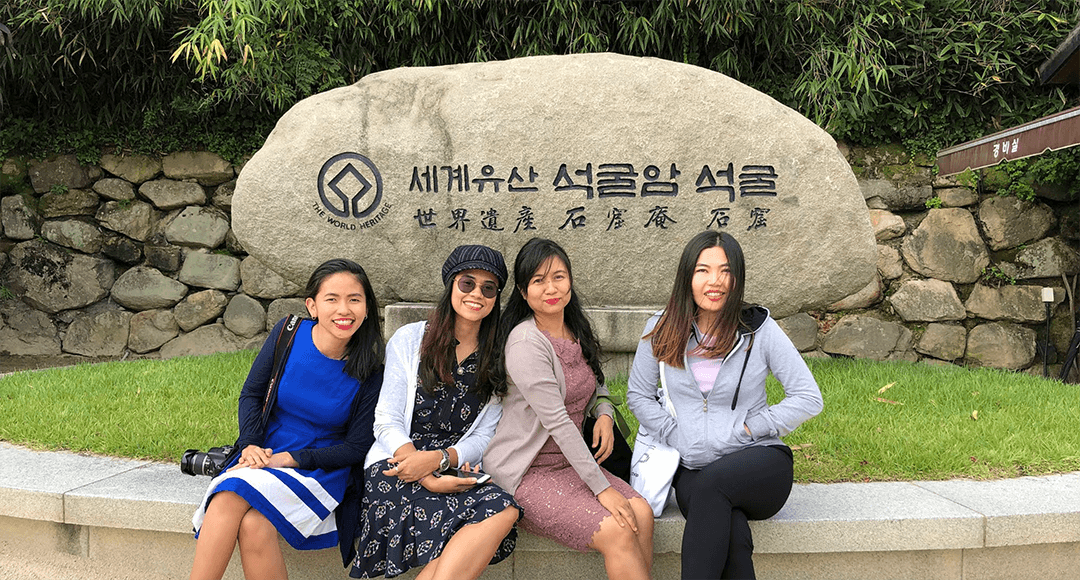
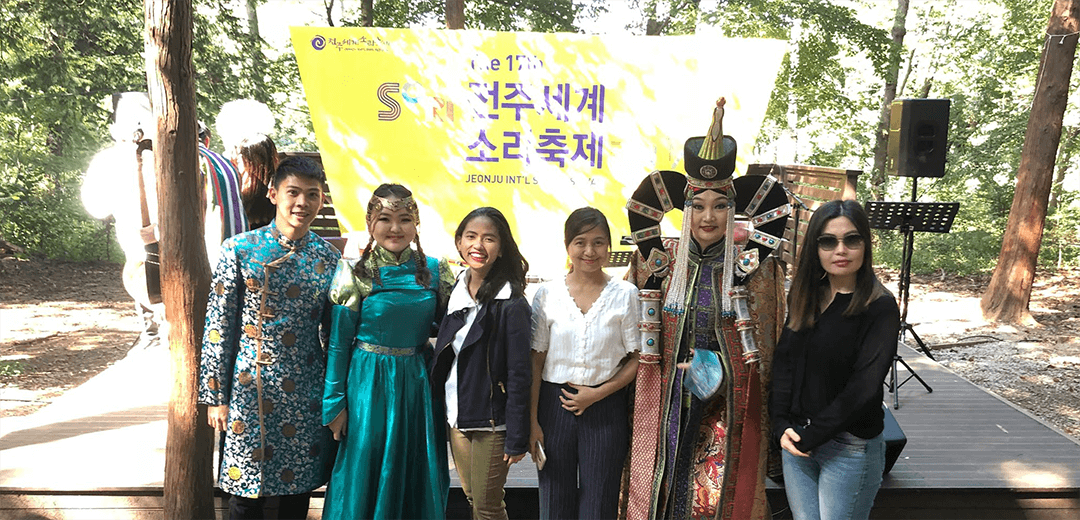
I also go on cultural trips and immersions that were able to expose me to the diverse intangible cultural heritage elements and UNESCO World Heritage sites in South Korea. Together with my CPI coparticipants, we were able to visit the Mosi Weaving Village in Seocheon in the Hansan Region. We met one of the oldest cultural bearers of the Hansan Mosi. Hansan Mosi is inscribed in the UNESCO List of Intangible Cultural Heritage Elements. Furthermore, I was able to attend cultural events such as the ICH Film Festival, Sori Music Festival and the Andong Mask Dance Festival.

QWhat was the most impressive experience in CPI program so far?
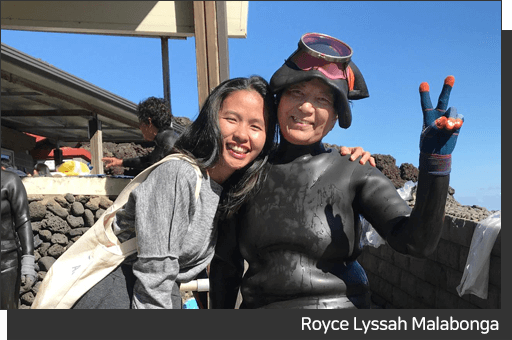
The most impressive experience and the most memorable thus far is the cultural trip that I’ve had at the Jeju Island. I went to Jeju Island because I am conducting a research on the Jeju Haenyeo through the perspectives of ecofeminism and sustainable development. The highlight of the Jeju trip was meeting the resilient Jeju Haenyeos and seeing in person how they dive underwater without sophisticated diving apparatus. Even before doing the CPI program, when I learned about the Jeju haenyeos’ fascinating culture, I immediately had the desire to do a research and learn deeply the culture of the women divers who are an epitome of women empowerment and resilience.
QYou have only one and a half months in CPI program. How would you like to spend the rest of the program?
The remaining weeks of the CPI program will be devoted to finishing my research project and enjoying the transformation of the colors of the natural landscapes of Korea during the autumn foliage season.
QWhat do you think you would achieve through the program?
Through the CPI program, I am able to have cultural exchanges and learn from the diverse experiences of CPI participants from different parts of the world especially from my co participants from Myanmar, Kyrgyzstan and Thailand. In addition, I would be able to build cultural networks from the cultural heritage practitioners that I had the opportunity to meet during the program.
The five month residency program also allowed me to immerse in Korean culture which has managed to reconcile tradition and modernity. My exposure to the Korean intangible cultural heritage will definitely contribute to honing my academic and professional skills in the field of research and safeguarding.
Most importantly, it is the lasting friendships that I was able to forge with the wonderful people that I have met during the CPI program that I will get to keep and treasure even after the program finishes.


