Yalicel Gabeira Londres from Cuba 
National Museum of Modern and Contemporary Art
QPlease introduce yourself briefly
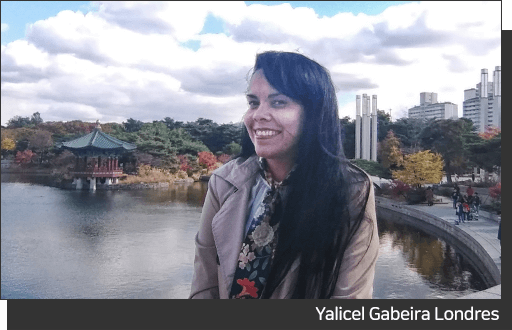
My name is Yalicel Gabeira Londres. I am an Art Historian and researcher from Cuba. I earned a bachelor’s degree in Art History at Universidad de la Habana in 2009 and a master’s degree at Universidad Iberoamericana from Mexico in 2018. I am currently a Ph.D. student at the program in History and Critical Theory of Art at the same university. In my research practice, I am interested in exploring different topics such as the uses of archival contents, forms and methodologies in contemporary artistic practices, issues of memory, the representation of the past and the interest in the rewriting of history.
QWhat activities have you been doing in your home country?
One of the most valuable experiences in my professional career was working at Wifredo Lam Contemporary Art Center for seven years (2009-2016) and being part of the curatorial team of the 12th Havana Biennale “Between the idea and the experience”. This event, internationally recognized not only for its antiquity but also for the contributions it made to the model of the contemporary biennale, had a great impact on my formation. Founded in 1982, the Wifredo Lam Center was created in order to research and promote the arts produced in third world countries, a "cultural periphery", then unknown in international art circuits.
I worked as part of the Conservation and temporary exhibitions team, in the research and management of the permanent collection as well as the coordination of more than 15 exhibition projects. It was a period of continuous learning, of knowing the work of many artists, curators, and researchers from different countries. I feel grateful to have been part of the biennale project and to keep a critical and historiographic commitment to its tradition and values.
QHow did you come to participate in the CPI?
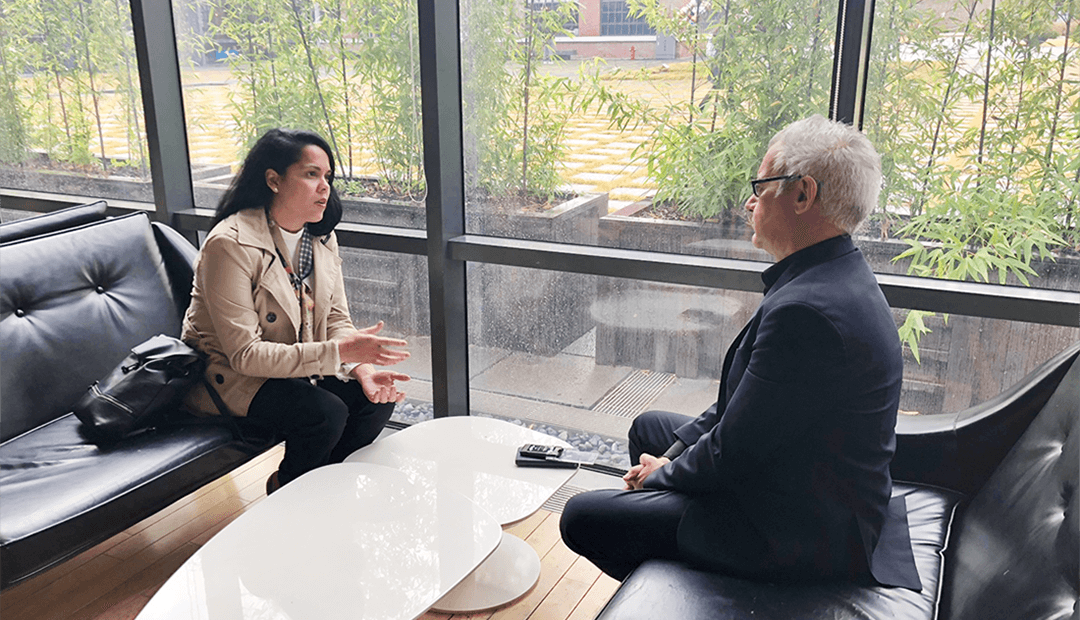
Coming to Korea and participating in the International Research Fellow Program at the National Museum of Modern and Contemporary Art has been a big challenge from the beginning. I am the second fellow from Cuba attending the program at MMCA. I learned about this experience from my friend and colleague Edisabel Marrero, one of the fellows invited by the CPI program and MMCA in 2014. I was very curious to learn more about Korean contemporary art, museums and collections. I was especially motivated by the opportunity to visit the Gwangju Biennale, Busan Biennale, and Mediacity Seoul Biennale. I had previously known about these events through articles and reviews, but I had never been able to attend.
The Gwangju Biennale, for example, has included the work of Cuban artists in several of its editions. Its inaugural grand prize was won by the Cuban artist Alexis Leyva (Kcho) in 1995 with a work titled Para Olvidar (In order to forget), discussing the problem of migration.
In the current edition of the Biennale, I had the opportunity to see this work in a new displaying, and to appreciate the work of other Cuban artists such as Yoan Capote, Néstor Siré, Alexander Arrechea, Los Carpinteros, and Carlos Garaicoa.
Another of my motivations for coming to Korea was the impact of the installation “Harmonious Havana” by Korean artist Han Sungpil, invited to the twelfth edition of the Havana Biennale by the curator Edisabel Marrero. A work with a powerful cultural symbol (the image of the Three-story Stone Pagoda, Korean National Treasure No.112), inserted in one of the most symbolic spaces of the City of Havana. This project also constituted an important and necessary rapprochement between both countries.
QWhat activities have you been doing in MMCA Korea?
Could you tell us the project you have been in charge of?
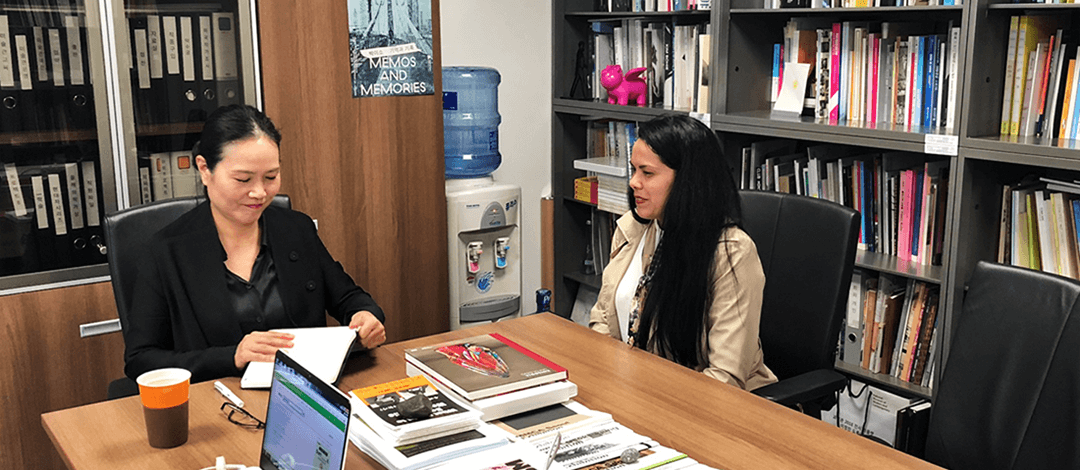
During my research stay I have had the opportunity to develop multiple activities: visits to museums, attendance to artists' talks and lectures, exchange with curators, visits to diverse exhibitions not only presented in the different branches of MMCA but also in other institutions, galleries and alternative spaces such as the National Museum of Korea, National Folk Museum, SeMa Museum, Kimdaljin Art Archive and Museum, Art Sonje Center, Song Eun ArtSpace, among others.
It has been an excellent program of activities coordinated by MMCA's Research and Publications Department. As part of the activities, I had the opportunity to visit the different venues of the biennales.
I have also conducted a research project that proposes a dialogue between a selection of artists from Latin America and Korea. Artists with a systematic practice around the use of archival contents.
Through the appropriation, representation, and reinterpretation of these materials, artists make visible new ways of telling history, alternative and discontinuous forms, paying attention to invisible zones in official discourses.
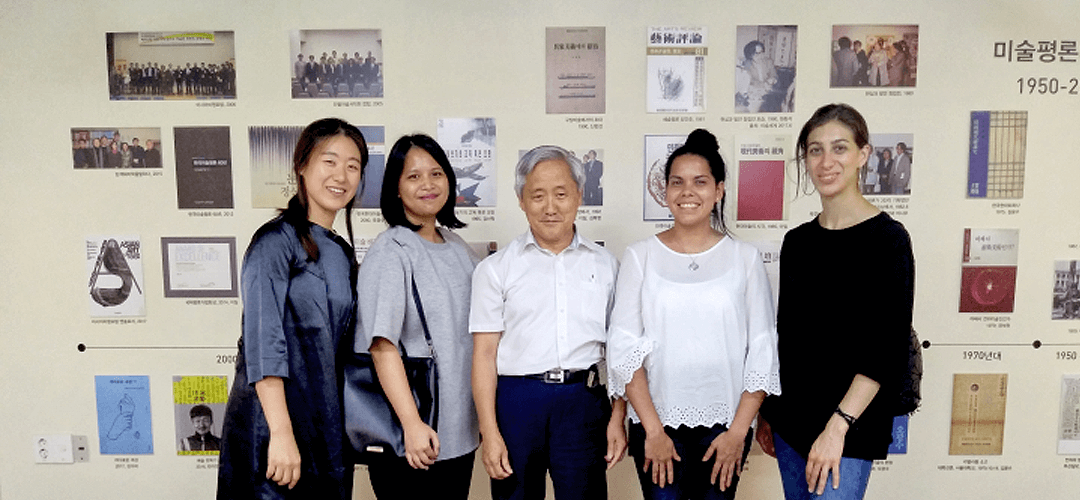
Dialogue with artists, interviews, and exchanges with Korean researchers and curators have had a great importance for the research process.
I have also been impressed by the attention given to archives in exhibitions, especially organized by MMCA, as well as the work of the Collection and Archive Department in conserving materials of great testimonial value. A significant example is the exhibition "Memos and Memories", which focuses on the work of Korean artist Bahc Yiso (1984-2003). During this period I visited the exhibition several times, motivated by the number of valuable documents, notebooks and sketches created by the artist.
QWhat do you think is the biggest difference in a museum between your country and Korea?
I think there are many differences, especially in the number of resources and the accessibility of information. One of the most notable differences is related to the work of archives and conservation. I think that in Cuba we need to advance and develop methods for the management of documentary collections, digitization, and access. It is very important to encourage new exchanges, to learn about other work experiences (such as those developed in MMCA) that allow us to improve the uses of the archives and their presence in exhibition and research projects.
QCould you suggest ways to vitalise the exchange of Korean art and Cuban art?
I think there is a history of cultural exchanges between Korean and Cuban art, but there are still many possibilities to explore. The experience in Korea has allowed me to think about some exhibition projects and dialogues between the art produced in both contexts. Other interesting exchange possibilities are related to the field of museums, collection management, and archives. I have many ideas in mind and wish to share the experience in Korea with my colleagues in Cuba.
QHow would CPI program affect your career and life in the future?
Although it is too soon to have a critical judgment of the contributions of this experience, I consider it has been a great opportunity to improve in the professional and intellectual order. I would like to be able to use in an effective way all the knowledge and experience acquired in these months through proposals for exhibitions or projects that bring our countries closer in the cultural field. It remains a lot to do in this regard. I have been impressed by the reaction of many Koreans to the culture of my country, especially their admiration for our music through the legacy of the Buena Vista Social Club. Korean culture also has an impact on Cuban society, not only through the global effect of the Korean wave but also the interest in the language. Nowadays, the José Martí Cultural Foundation has a program of Korean language classes that catch the attention of many people in Cuba. A few days before finishing my stay in Korea, I perceive this opportunity not as the end of a cycle but as the beginning of a new process, visualizing new possibilities of exchange and dialogues in the future. I am especially grateful to the CPI and MMCA for having accepted me into the program and for all the support in the research process.


